


Women take to streets against Bar Licenses, demand dry state status for Ladakh Religious women’s wings and women’s associations raise concerns over alcohol’s impact on families, youth and Ladakh’s cultural values
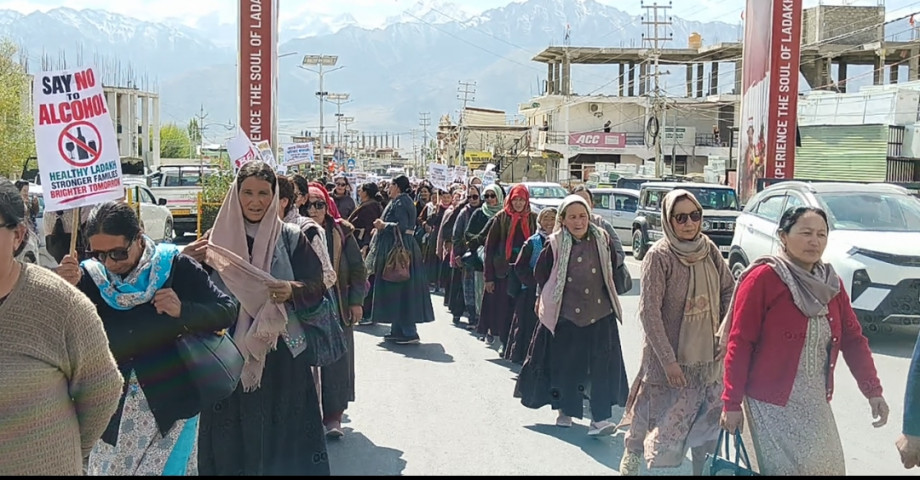
Women from different religious organisations and associations took to the streets of Leh on October 12, holding a peace rally against the granting of bar licences in Ladakh and demanding that the Union Territory be declared a dry state.
Organised by the women’s wings of religious organisations and various women’s associations, the rally began at Nawang Dorjay Stobdan Memorial Park and culminated in the Main Market. The protesters urged the UT administration to reconsider its decision to grant licences for opening bars in different villages, expressing concern over the potential social, cultural and family-related consequences of increased alcohol consumption, particularly among the younger generation.
The women representatives called for collective action across Ladakh, urging people from different communities to come together and raise their concerns. They questioned the rationale behind granting bar licences in villages and stressed that the sentiments of local residents, traditional practices and Ladakh’s cultural values should be taken into account before such decisions are made.
Addressing the gathering, Ladakh Buddhist Association (LBA) Women’s Wing President Kunzes Dolma expressed concern over the possible impact of alcohol consumption on Ladakh’s society and cultural identity. She urged the administration to listen to the concerns of local communities and consider the long-term consequences of granting bar licences across the region.
She also highlighted concerns about alcohol consumption during the festival season, when people gather to celebrate late into the night. She stressed the need to pay greater attention to the safety of young people and the potential social consequences of increased alcohol consumption during such celebrations.
Kunzes Dolma said the government should focus on creating better opportunities for young people through education, coaching and sports rather than allowing alcohol-related concerns to grow. She called for encouraging youth to pursue careers as doctors, engineers and sportspersons and to participate in activities such as cycling, football, cricket and archery.
She urged the government to take public concerns seriously and protect Ladakh’s traditions and cultural identity while ensuring a better future for the younger generation.
President of the Anjuman Imamia Women’s Wing, Nasreen Maryam, highlighted the impact of alcohol consumption on families and society. She said several cases of fighting linked to alcohol-related problems had been reported at police stations.
She expressed concern that alcohol consumption could lead to conflicts within families and adversely affect children. She also cautioned against the possibility of young people being exposed to drug use.
Maryam emphasised the need to create greater awareness about the harmful effects of alcohol and protect families and young people from its consequences. She said alcohol-related problems could extend beyond individuals and affect the wider community.
President of the Anjuman Moin-ul-Islam Women’s Wing, Ayesha Malo, said alcohol-related concerns were not confined to any one religion or community but affected people across religious backgrounds.
“Alcohol is not restricted to one religion. Alcohol is bad for all religions. This is the first step towards doing drugs,” she said.
Clarifying the purpose of the rally, Malo said the protest was not against the law but an effort to raise public concerns and express the community’s views on the administration’s decision.
“We are not against the law or anything. These are our rights. We have to talk about what is wrong and what is right,” she said.
Expressing concern over the limited participation in the rally, she called on more people to come forward and make their voices heard. She stressed that opposition to the decision should be a collective effort involving residents from across Ladakh, rather than a responsibility borne by only a few families.
-
 Reach Ladakh Skara Yokma, Airport Road, Near Councillor Quarter, India.


© 2018 Reachladakh. All rights reserved.
Web designs By : India Internet