


Secretary, Rural Development reviews Project Tsangda and Solid Waste Management in UT Ladakh
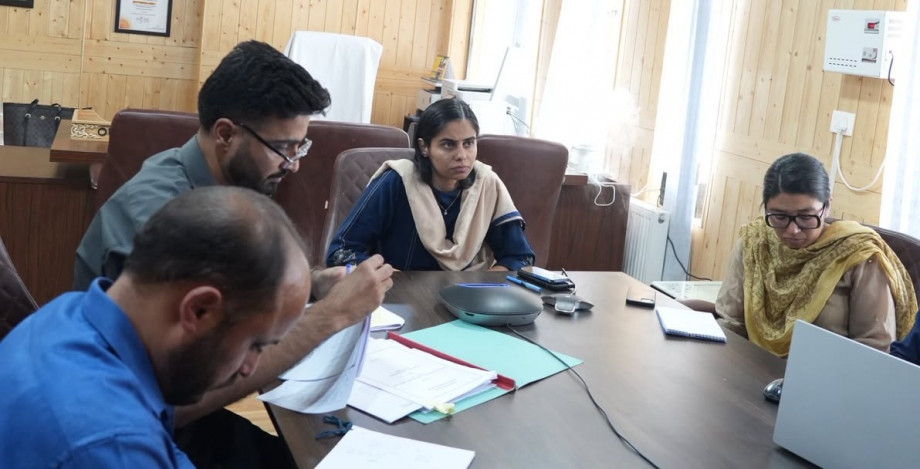
Administrative Secretary, Rural Development Department (RDD), UT Ladakh, Nidhi Malik, chaired a comprehensive review meeting on July 6 to assess the functioning of Project Tsangda and the Solid Resource Management Centres (SRMCs) established across Leh and Kargil districts under the Swachh Bharat Mission (Grameen).
The meeting was attended virtually by the Deputy Commissioners of Leh, Kargil and Drass; Additional District Development Commissioner, Leh; Sub-Divisional Magistrates of Nubra, Changthang, Sham and Zanskar; Director, Rural Development Department; Joint Directors of Planning and Finance; Project Director, Ladakh Renewable Energy Development Agency (LREDA); District Panchayat Officers; District Panchayat Development Officers; and other concerned officials.
At the outset, Director, Rural Development Department, Sajjad Hussain, presented an overview of the solid waste management system in the Union Territory. He briefed the meeting on the operational status of the 35 SRMCs established across Leh and Kargil, the institutional framework for their management, operational challenges, existing Memorandums of Understanding (MoUs) with LREDA for operation and maintenance, and the forward linkage agreement with Ladakh Recycle for collection and processing of recyclable waste.
Reviewing the project's implementation, Nidhi Malik stressed that the Rural Development Department, as the nodal agency, must play a proactive role in supervising and monitoring the project. She directed all stakeholders to adhere strictly to the provisions of the MoUs, review the existing operational framework, identify gaps, and submit recommendations to strengthen the system.
Expressing concern over delays in performance reporting, the Secretary instructed LREDA to ensure the timely submission of monthly and quarterly reports covering waste collection, segregation, processing, and vehicle utilisation. She also called for the adoption of a common digital platform to facilitate effective monitoring and evidence-based decision-making.
The meeting reviewed the financial sustainability of SRMC operations, including operational expenditure, maintenance costs, funding support, and revenue generation. The Secretary directed the concerned departments to examine existing funding mechanisms, address operational gaps, explore resource convergence, and assess corpus fund requirements to ensure uninterrupted functioning of the facilities.
Emphasising accountability, she instructed that GPS-based monitoring of waste collection vehicles be strengthened and all vehicles maintained in roadworthy condition. Deputy Commissioners were directed to identify garbage-vulnerable areas, unauthorised dumping sites, and locations requiring immediate intervention. District administrations were also asked to intensify public awareness campaigns and enforce the Solid Waste Management Rules through appropriate penalties for littering and illegal dumping.
Reviewing forward linkage arrangements, the Secretary directed that the pending rate revision mechanism for recyclable waste be expedited through the competent authority. She also suggested exploring alternative models, including competitive bidding and benchmarking with municipal practices, to ensure transparency, efficiency, and better value for recyclable materials.
Deputy Commissioners and field officers highlighted district-specific challenges, including the need for additional SRMCs in tourist-intensive and remote areas, retrofitting waste collection vehicles for four-way segregation, installation of CCTV cameras at vulnerable locations, provision of uniforms and safety equipment for sanitation workers, and temporary facilities for handling hazardous waste.
The meeting placed special emphasis on achieving source segregation of waste in compliance with the Solid Waste Management Rules and the directions of the Supreme Court. The Secretary instructed all districts to prepare realistic action plans to improve household-level segregation, strengthen collection systems, and ensure scientific disposal of waste.
Reviewing Project Tsangda, particularly in Nubra and other high tourist footfall areas, she directed the concerned Deputy Commissioners to prepare decentralised waste management plans, strengthen wet waste management through composting and bio-waste solutions, improve linkages with authorised recyclers, and develop sustainable waste management solutions for remote locations. She also instructed that issues relating to electricity supply and land availability for SRMCs be addressed on priority.
The Secretary further reviewed district-wise infrastructure proposals submitted by the Deputy Commissioners to the Divisional Commissioner, including requirements for additional SRMCs, waste collection vehicles, machinery, bins, uniforms, and operational costs. She directed officials to examine the proposals for inclusion in the forthcoming UT Budget.
The meeting concluded with directions to all districts and implementing agencies to submit time-bound Action Taken Reports (ATRs) and ensure close coordination among all stakeholders to strengthen the solid waste management system across Ladakh.
-
 Reach Ladakh Skara Yokma, Airport Road, Near Councillor Quarter, India.


© 2018 Reachladakh. All rights reserved.
Web designs By : India Internet