


Invasive Buff-tip moth threatens Ladakh’s fragile ecosystem, study warns
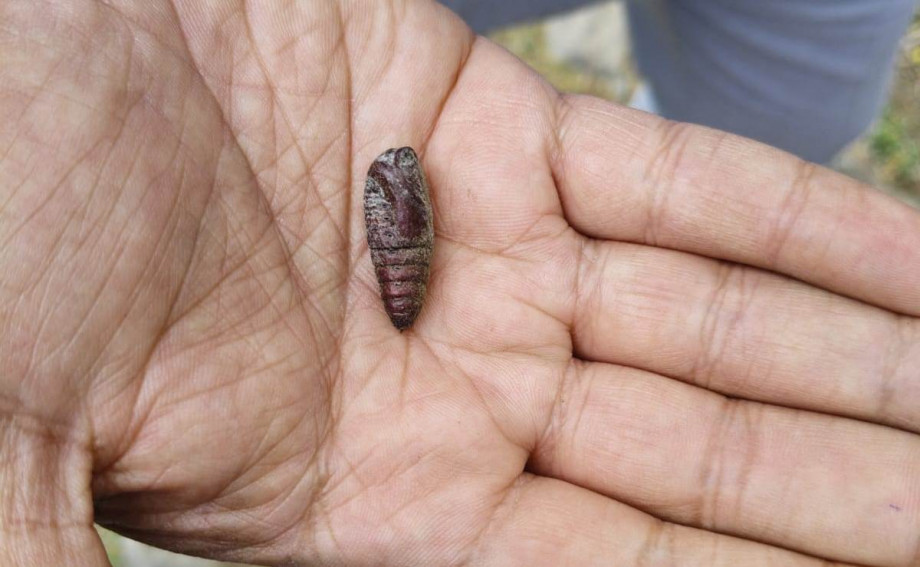
Krishi Vigyan Kendra (KVK) Kargil, under the supervision of Dr Mohd Hussain, Assistant Professor, GDC Zanskar, has reported the occurrence of an invasive Buff-tip moth in the Himalayan region of Ladakh. The study, conducted between June 2021 and August 2023, documented the alarming spread and impact of the moth on local vegetation.
The findings revealed that the invasive species can cause complete defoliation of its host plant within 30 days, highlighting the serious ecological threat posed to the fragile ecosystem of the region. Researchers observed that the moth has established a significant presence in the Suru Valley, particularly affecting Salix alba (white willow), a tree species of immense ecological and environmental importance in the cold arid region of Ladakh.
Scientists expressed concern that the unchecked spread of the pest could adversely impact biodiversity and threaten the sustainability of local vegetation.
The study emphasised the urgent need for regular monitoring, ecological assessment and the development of effective management strategies to contain the invasive pest and safeguard the region’s plant resources.
The findings were featured in the Science column of The Hindu dated May 9, 2026, drawing national attention to the emerging ecological challenge in Ladakh. Following directions from the Ministry of Agriculture and Farmers Welfare, a team of scientists visited the region to verify the occurrence and assess the extent of the infestation.
The team comprised Dr Mithilesh Kumar Arya, Deputy Director (PP), CIPMC Jammu; Dr Haroon Rashid Hakla, APPO (PP), CIPMC Srinagar; Dr Nasreen
F. Kacho, Senior Scientist and Head, KVK Kargil; and Dr Nazeer Hussain, Agronomist, KVK Kargil.
Under the supervision of Dr Mohd Hussain, a field survey of the Buff-tip moth infestation in Salix species was carried out in the villages of Minjee, Khumbathang, Faroona, Khachan, Lankarchey, Thiuna, Thasgam and Sankoo in Suru Valley. The survey was conducted following instructions from the Plant Protection Adviser, Government of India, after reports that the invasive pest had spread in the region and was severely damaging Salix species.
Scientists observed that the moth species, identified as Phalera sp., is voracious and polyphagous in nature and is capable of completely defoliating entire trees within a week.
The researchers stated that controlling the invasive pest and restricting its spread to the affected area is now a matter of serious concern. During the survey, scientists found that the pest was currently in the pupation stage, with pupae detected in soil debris around willow trees in Khachan and Faroona villages.
-
 Reach Ladakh Skara Yokma, Airport Road, Near Councillor Quarter, India.


© 2018 Reachladakh. All rights reserved.
Web designs By : India Internet