


From Rescue to Rehabilitation: Chamba Animal Care centre offers hope to injured dogs in Ladakh Spread across 12.5 acres, the facility combines animal care with compassion rooted in spiritual values
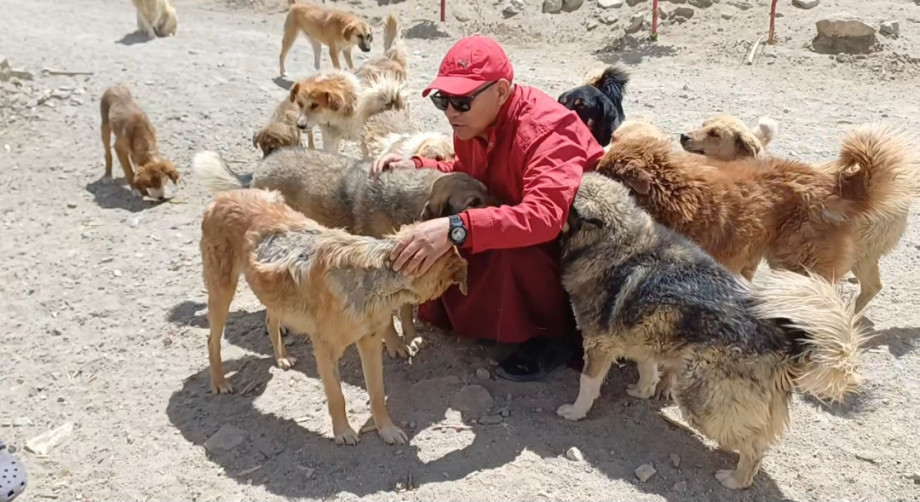
Amid growing concerns over Ladakh’s rising street dog population and increasing cases of injured animals on highways, the Chamba Animal Care Centre has emerged as a major rescue and rehabilitation center for vulnerable dogs in the region.
Spread across 12.5 acres of land allotted by Thiksey Monastery, the Chamba Animal Care Center was formally inaugurated on July 7, 2024, by His Eminence Thiksey Rinpoche and Maneka Gandhi, noted animal rights activist and former Union Minister.
The shelter is currently home to more than 650 dogs, many of them victims of road accidents, paralysis, amputations, disease, or abandonment.
According to shelter authorities, emergency rescue calls are received daily, most involving dogs struck by speeding vehicles and left critically injured along Ladakh’s roads.
“These animals would otherwise die alone and in pain,” said Phuntsog Wangial, Founding President of the Chamba Animal Care Centre.
He said rescued dogs are transported to private and government veterinary facilities for treatment and rehabilitation. “While healthy and sterilized dogs are returned to their original territories, animals unable to survive on the streets remain under permanent care at the shelter,” he said.
Wangial added that the facility includes a retirement section for elderly dogs, special rehabilitation spaces for paralyzed animals, quarantine units for dogs infected with Canine Distemper Virus (CDV), and separate recovery pens for sick or sterilized dogs.
Most dogs roam freely across the shelter’s 12.5-acre campus, while special-needs animals are cared for in protected areas designed for comfort and recovery.
Ven.Chamba Norphel, Member of the Chamba Animal Care Centre, said the dogs are fed twice daily with a mixture of lentils, rice, soy protein, and dry dog food.
“The center currently relies heavily on donations to sustain its operations,” he said.
Phuntsog Wangial stressed that addressing Ladakh’s stray dog issue requires collective efforts from all stakeholders, including government departments, the administration, NGOs, and local communities.
“Without everyone’s support, it is not easy for animal care centers in Leh to work individually,” he said, adding that the shelter currently bears a monthly expenditure of nearly Rs 4.5 lakh.
He also appealed to people to stop abandoning dogs from one locality to another, saying the practice disrupts sterilization efforts and often leads to attacks by territorial dogs.
“Such inhumane activity should stop,” Wangial said.
Speaking about compassion and animal welfare, Lauren Rathvon from America, who has been visiting Ladakh regularly since 2010 and is working as an Executive Member of Chamba Animal Care Society said compassion toward animals is deeply connected to spiritual practice.
“The Buddha teaches that this one precious human life is rare because we humans get the opportunity to practice compassion,” Rathvon said. “The people of Ladakh are already very compassionate, and some of the greatest Buddhist masters were tested through their compassion for dogs.”
Referring to Buddhist teachings, Rathvon said the Mahasiddha Kukkuripa chose compassion for his dog over heavenly rewards, while the Buddhist scholar Asanga was willing to remove maggots from a suffering dog with his own tongue to avoid harming the tiny creatures
“These examples show that how we treat animals is not separate from our spiritual practice — it is our spiritual practice,” he said.
Rathvon also emphasized that compassion toward animals is a shared value across religions.
“In Islam, offering water to a thirsty dog is considered worthy of divine mercy. In Hinduism, the divine is present in all beings, and Jainism teaches ahimsa, or nonviolence, as the highest dharma,” he said.
“The way we treat the voiceless and vulnerable reflects who we are as human beings,” Rathvon added. “The dogs of Ladakh ask us one question — are we serious about our compassion practice?”
As Ladakh grapples with the growing challenge of stray dogs and injured animals, the work being carried out at the Chamba Animal Care Centre highlights both the scale of the crisis and the importance of compassion-driven action. Shelter members say long-term solutions will require stronger coordination between authorities, animal welfare groups, and local communities to ensure humane treatment, effective sterilization, and safer conditions for both animals and residents across the region.
-
 Reach Ladakh Skara Yokma, Airport Road, Near Councillor Quarter, India.


© 2018 Reachladakh. All rights reserved.
Web designs By : India Internet