


Devotees, delegations from across India participate in Sindhu Darshan festival
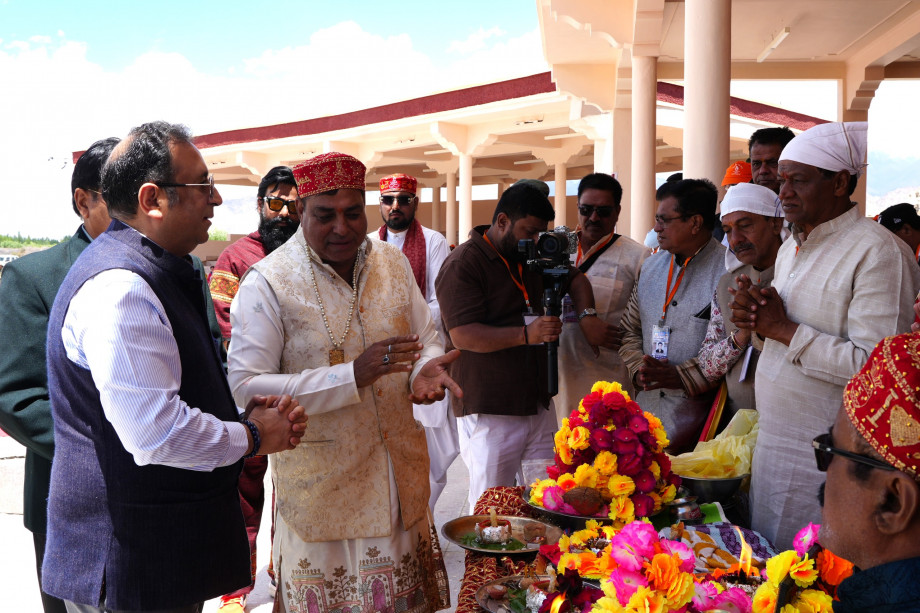
The Sindhu Darshan Festival 2026 was celebrated with great devotion, patriotism, and cultural fervour at Sindhu Ghat, Leh on June 6, reaffirming the message of national unity, cultural harmony, and India's rich civilizational heritage.
Organized by the Bharatiya Sindhu Sabha, Leh, under the theme "One India, Great India," the festival witnessed enthusiastic participation from devotees, dignitaries, and delegations representing diverse regions, cultures, and communities from Ladakh and across the country.
Chief Secretary of the Union Territory of Ladakh, Ashish Kundra, attended the event as the Chief Guest. The programme commenced with the traditional lighting of the ceremonial lamp, symbolizing peace, unity, and spiritual harmony.
Among the distinguished guests present were Virendra Ghanshyamdas Kukreja from Nagpur, representatives of the Bharatiya Sindhu Sabha, religious leaders, social workers, and delegations from different parts of India. The event featured a series of vibrant cultural performances showcasing the country's rich traditions, heritage, and unity.
Patriotic songs and cultural presentations highlighted the spirit of national integration and the significance of the sacred Sindhu River.
Addressing the gathering, speakers emphasized the importance of preserving India's cultural and civilizational heritage through initiatives such as the Sindhu Darshan Festival. They encouraged the younger generation to visit the sacred site and strengthen their connection with the nation's history, culture, and spiritual traditions.
In his keynote address, Chief Secretary Ashish Kundra shared his personal reflections on the significance of the Sindhu River and its unique place in India's civilization. He warmly welcomed the visiting delegations and appreciated their participation despite the challenges of travelling to the high-altitude region of Ladakh.
Reflecting on his experiences in the region, Kundra highlighted the beauty and spiritual essence of the Sindhu River, noting that the route from Sindhu Ghat to Thiksey Monastery offers breathtaking views and a profound sense of connection with nature and history. He remarked that during the harsh winter months, when temperatures often fall below minus 20 degrees Celsius, the river presents a magnificent landscape covered in snow.
Describing the Sindhu River as a symbol of India's ancient civilization and national identity, Kundra noted that the Indus River, from which India derives its name, is among the world's oldest civilizational rivers and continues to inspire a deep sense of belonging among visitors. He observed that people from different states and backgrounds visit the sacred river with faith and devotion, believing that their prayers and aspirations are fulfilled through its blessings.
He also praised Ladakh's unique social fabric, highlighting the peaceful coexistence of diverse religious and cultural communities. Appreciating the resilience of the people living in the challenging high-altitude environment, he acknowledged Ladakh's important role in preserving the country's civilizational heritage.
The Chief Secretary congratulated the organizers for successfully conducting the festival over the years and expressed hope that it would continue to attract visitors from across India, thereby strengthening national unity and cultural awareness.
The programme was also attended by Deputy Commissioner Leh, Padma Shri awardee R. Padma Gurmet, the Director of the National Institute of Sowa-Rigpa, community leaders, eminent guests, and delegations from different parts of the country.
The celebration concluded with a collective pledge to promote the values of unity, cultural harmony, and national integration embodied by the Sindhu Darshan Festival, reaffirming the timeless bond between the people of India and the sacred Sindhu River.
-
 Reach Ladakh Skara Yokma, Airport Road, Near Councillor Quarter, India.


© 2018 Reachladakh. All rights reserved.
Web designs By : India Internet