


Administrative Secretary calls for stronger monitoring of substance abuse cases in Ladakh
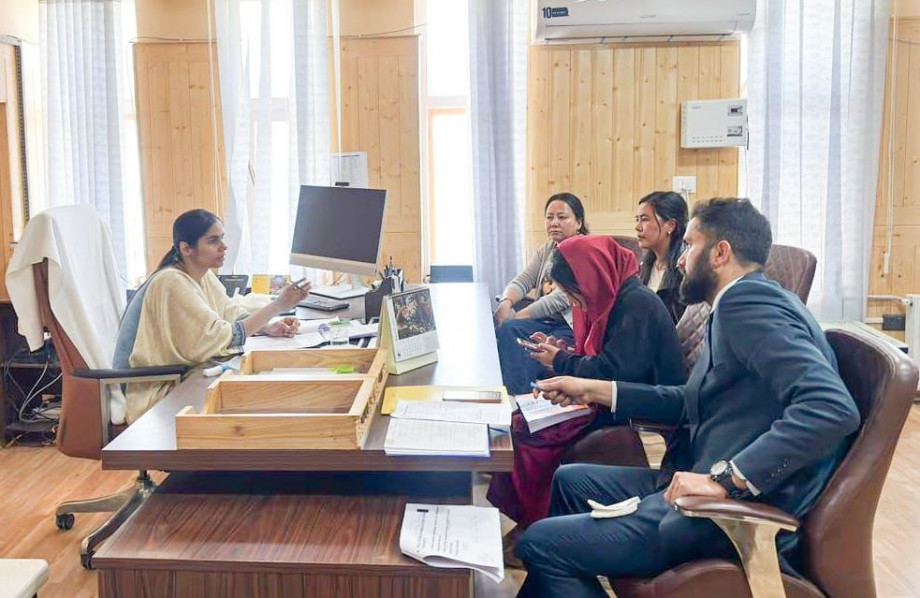
Administrative Secretary, Social and Tribal Welfare Department, UT Ladakh, Nidhi Malik, on May 27 chaired a comprehensive review meeting to assess the functioning and activities of the Drug De-Addiction and Rehabilitation Centres (DDACs) operating in Leh and Kargil districts under the National Action Plan for Drug Demand Reduction (NAPDDR) of the Ministry of Social Justice and Empowerment, Government of India.
The meeting focused on the prevention, treatment, and management of substance abuse cases in the Union Territory and reviewed the ongoing awareness and rehabilitation initiatives being undertaken at the district level by DDAC teams.
During the meeting, the Administrative Secretary reviewed in detail the presentation prepared by the concerned departments and examined various components related to awareness generation, treatment, counselling, rehabilitation, and outreach activities. She directed officials to ensure that all future presentations and records contain accurate, updated, and district-wise information to reflect the actual ground situation and support effective monitoring and policy planning.
The presentation highlighted the operational work profile of DDAC Leh and Kargil and showcased the wide range of preventive, rehabilitative, and awareness-based interventions being conducted across the Union Territory.
Officials informed that DDAC Leh and Kargil have collectively reached more than 16,000 beneficiaries through treatment, counselling, awareness programmes, and outreach activities. Data presented during the meeting showed that 101 patients had been admitted under in-patient treatment facilities, while 337 individuals received OPD services and 53 beneficiaries successfully recovered through rehabilitation and counselling support.
The presentation further reflected extensive outreach activities being carried out in schools, colleges, villages, and vulnerable communities by DDAC teams.
The Administrative Secretary also reviewed in detail the status of patients at DDAC centres, district-wise distribution of cases, demographic profiles of in-patient admissions, and the pattern of substance abuse reported in different areas. The data indicated that the majority of admitted cases belonged to the youth age group between 20 and 30 years.
In Kargil district, heroin- and cannabis-related cases constituted a significant proportion of admissions, while cannabis-related cases were among the highest reported in Leh district. The presentation also highlighted counselling sessions, therapy support, medical treatment facilities, and rehabilitation services being provided to affected individuals.
Special emphasis was laid on awareness and prevention activities being conducted under the Nasha Mukt Bharat Abhiyaan (NMBA) and other anti-drug initiatives. The meeting reviewed awareness campaigns organised in collaboration with the Police Department, religious organisations, educational institutions, and community stakeholders.
Activities such as counselling sessions in schools and colleges, hotspot visits, door-to-door awareness drives, public pledge ceremonies, rallies, workshops, seminars, and IEC distribution campaigns were also discussed during the meeting.
The Administrative Secretary appreciated the efforts of DDAC teams in conducting community-based programmes, including peer-led “Yato Club” initiatives in schools, Navchetna capacity-building programmes, and awareness sessions in public gathering spaces. The presentation also highlighted collaborative outreach programmes conducted with the Police Department and religious organisations in Leh and Kargil districts to sensitise youth and the general public about the harmful effects of substance abuse.
Reviewing the future strategy, Malik stressed the need for fact-based and follow-up-oriented documentation of success stories of recovered beneficiaries to effectively reflect the impact of counselling and rehabilitation services. She directed the concerned departments to ensure proper documentation of all awareness activities, outreach programmes, NMBA campaigns, event venues, dates, and action plans with verified and measurable data.
The meeting also reviewed the coordination mechanism between DDAC teams, the Police Department, medical professionals, and social welfare authorities in tackling the growing challenge of substance abuse in Ladakh. The Administrative Secretary directed all concerned departments to maintain updated records and accurate statistical information for strengthening policy interventions and ensuring better monitoring of cases.
During the discussion, doctors and officials suggested maintaining separate data related to women beneficiaries receiving treatment and counselling support in order to encourage more women to seek assistance without hesitation or fear of social stigma. Malik emphasised the importance of creating an inclusive, supportive, and stigma-free environment for all individuals undergoing treatment and rehabilitation.
The “Way Forward and Action Plan” presented during the meeting outlined several targeted interventions for the coming months. These include mass awareness generation programmes involving multiple stakeholders, identification and mapping of hotspot and vulnerable areas, prevention programmes in schools and colleges, anti-drug awareness campaigns through QR codes and digital platforms, IEC distribution activities, public outreach drives, and collaborative initiatives with religious organisations, sports clubs, educational institutions, and civil society groups.
The meeting also reviewed the Action Taken Report regarding the establishment of a dedicated toll-free helpline for substance abuse support in Ladakh. Officials informed that BSNL has been directed to initiate the allotment process for a toll-free helpline number, while a proposal for an easy-to-remember short-code helpline is also under consideration.
The Administrative Secretary directed the concerned departments to expedite the process so that counselling, referral, and rehabilitation support services can be made easily accessible to the public across the Union Territory.
The meeting further discussed the Action Taken Report regarding directions issued under the chairmanship of the Chief Secretary, UT Ladakh, particularly concerning the establishment of a dedicated local helpline for substance abuse support and the creation of drug abuse prevention units at the block level involving social workers, pharmacists, and Panchayat-level officials.
Following the review meeting, Nidhi Malik visited the DDAC Centre to inspect the available infrastructure, medical facilities, and rehabilitation arrangements being provided to patients. She reviewed the bedding arrangements, medical assessment facilities, and counselling support systems and stressed the importance of ensuring a safe, supportive, and dignified environment for individuals undergoing treatment and rehabilitation.
She reiterated the commitment of the UT Administration towards strengthening institutional mechanisms and enhancing rehabilitation and prevention services to effectively address substance abuse in Ladakh.
The meeting was attended by Consultant Psychiatrist Padma Angmo, Director Social and Tribal Welfare Zahida Bano, DDAC managers, doctors, and other concerned officials.
-
 Reach Ladakh Skara Yokma, Airport Road, Near Councillor Quarter, India.


© 2018 Reachladakh. All rights reserved.
Web designs By : India Internet