


A Revisit to Ladakh’s Flawed Politics
Politics in Ladakh, since India’s independence in 1947, has remained deeply flawed, shaped by neglect, limited representation, and delayed administrative justice. For many years after independence, Ladakh remained physically and politically isolated from the rest of the country. It was only in 1962–63 that the region began to see some degree of connectivity. However, an earlier and significant moment came on May 24, 1948, when an Indian Air Force DC-3 Dakota aircraft, piloted by Air Commodore Mehar Singh, landed on a hastily prepared airstrip in Leh. This operation was critical in securing Ladakh from Pakistani tribal invaders and reinforcing India’s military presence in the region.
In the aftermath of these developments, Ladakhi leaders, under the leadership of Kushok Bakula Rinpoche, travelled to Srinagar and New Delhi to highlight the region’s grievances. They spoke of the neglect and “step-motherly treatment” Ladakh faced under the Jammu and Kashmir government and sought fair inclusion in the democratic framework.
Responding to these concerns, Prime Minister Jawaharlal Nehru, along with Sheikh Abdullah, visited Leh on July 4, 1949. In the absence of proper road connectivity, the dignitaries travelled on horseback to reach various parts of the region. Nehru assured the people of Ladakh that they would receive fair treatment and supported Bakula Rinpoche as their representative in the state legislature. He also directed Sheikh Abdullah to work closely with Bakula for the welfare of the region.
Despite these assurances, the Kashmir-based administration paid limited attention to Ladakh. Development funds allocated by the Centre were unevenly distributed, and policies such as the land abolition laws were implemented without adequately considering local concerns. Ladakh also suffered from inadequate political representation. The region did not have a separate parliamentary constituency and was instead clubbed with Ganderbal, effectively limiting the ability of Ladakhis to voice their concerns at the national level.
Economically, Ladakh remained dependent on its traditional trade routes with Xinjiang, which continued until the Sino-Indian War disrupted them permanently. This war not only altered geopolitical realities but also dealt a severe blow to Ladakh’s economy, cutting off a vital source of livelihood for its people.
Frustrated by continued neglect, Kushok Bakula Rinpoche began openly criticising the Srinagar-centric administration. Relations between him and Sheikh Abdullah remained strained until Bakshi Ghulam Mohammad assumed power in 1953. Under Bakshi’s leadership, Bakula was inducted into the cabinet and served as a minister until his election to the Lok Sabha in 1967.
However, after Bakula’s departure from state politics, Ladakh once again faced marginalisation. The ruling Congress party in the state allegedly fostered internal divisions by splitting into factions, weakening Ladakh’s political voice. In response, the people of Ladakh united and launched agitations demanding fair representation and recognition of their language and culture. These movements led to the creation of posts for Ladakhi language teachers, ministerial representation for both Leh and Kargil, and the establishment of the Gajendragadkar Commission to examine issues related to fund allocation and development. The commission’s recommendations marked one of the early political successes for Ladakh.
The demand for Union Territory (UT) status gained momentum in 1973 after Balraj Madhok advocated for Ladakh’s separation from Jammu and Kashmir on grounds of national security and administrative efficiency. With the support of Kushok Bakula, the demand intensified and gained national attention. However, internal divisions among Ladakhi leaders weakened the movement, as some opposed separation on the grounds of national integration, even while supporting demands such as Scheduled Tribe (ST) status.
The 1970s and 1980s saw continued political uncertainty. Promises of regional autonomy remained largely unfulfilled. In 1989, large-scale protests erupted in Leh over the demand for ST status. The situation turned tragic when police firing resulted in the deaths of three protesters. This incident marked a turning point in Ladakh’s political history. In response, Kushok Bakula wrote a strongly worded letter to Prime Minister Rajiv Gandhi, highlighting the plight of Ladakh’s minority communities. His intervention played a crucial role in the eventual granting of ST status to sections of the Ladakhi population.
In the 1990s, the creation of the Ladakh Autonomous Hill Development Councils (LAHDC) in Leh and Kargil marked an important step towards decentralised governance. These councils were intended to provide greater administrative autonomy and address local development needs. However, while they improved governance at the local level, they did not fully address the broader political aspirations of the people.
The demand for Union Territory status continued to grow stronger over the years. Meanwhile, the Kashmir Valley witnessed significant political unrest, including the mass migration of Kashmiri Pandits in 1990. Recognising the distinct identity and challenges of Ladakh, various committees and interlocutors recommended separating Ladakh from the Kashmir Division. Eventually, on February 8, 2019, Ladakh was granted divisional status by Governor Satya Pal Malik.
A historic decision followed later that year. On October 5, 2019, the Government of India granted Union Territory status to Ladakh after the abrogation of Article 370. This move was widely seen as the culmination of decades of struggle by the people of Ladakh for direct governance from the Centre.
However, the transition to Union Territory status has brought new challenges. While the administrative structure has expanded significantly—with the presence of multiple IAS and IPS officers—concerns have emerged regarding the effectiveness of governance and the lack of legislative powers. Ladakh currently does not have an elected legislative assembly, limiting the role of local representatives in decision-making.
Additionally, there is a growing perception among locals that employment opportunities have declined under the new system. Despite the presence of two Hill Councils with elected representatives, their powers remain limited, and many key decisions are taken at higher administrative levels.
In recent years, civil society groups such as the Leh Apex Body and the Kargil Democratic Alliance have spearheaded movements demanding statehood and inclusion under the Sixth Schedule of the Constitution. These demands aim to safeguard land, culture, and employment rights while ensuring greater autonomy. Despite several rounds of discussions with the Central Government, no concrete resolution has been reached, leading to increasing frustration among the people.
In my view, the Government of India must act decisively to address these concerns. Granting statehood or extending Sixth Schedule provisions to Ladakh—on the lines of regions like the Northeast or models such as Puducherry—could provide a balanced solution. Such measures would ensure both administrative efficiency and democratic participation.
Ladakh holds immense strategic importance for India, sharing borders with China and Pakistan. It is often described as the crown of the nation, not only for its geography but also for its cultural and historical significance. Ensuring the happiness, stability, and prosperity of its people is therefore not just a regional concern but a matter of national interest.
The continued delay in addressing Ladakh’s demands risks deepening public discontent. The Central Government must move beyond symbolic measures and take concrete steps to ensure inclusive governance, protect local interests, and fulfil the long-standing aspirations of the people.
Only a politically empowered and economically secure Ladakh can truly contribute to the strength and unity of the nation.
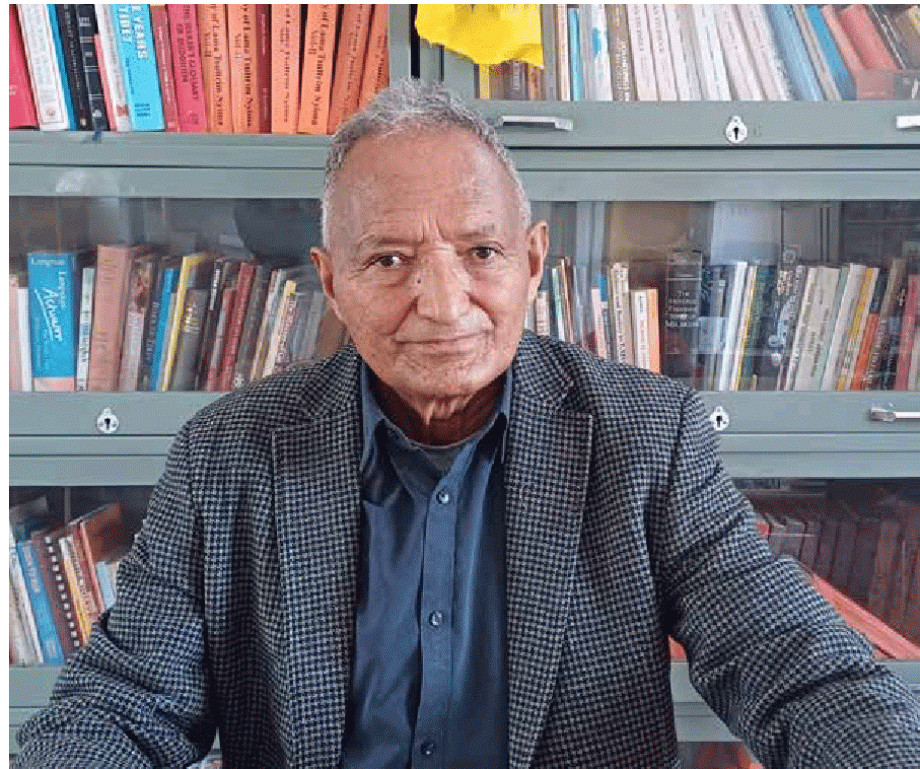
(The writer is the Founder Director of Centre for Research on Ladakh. You can send your views and comment at sntsering52@gmail.com)
-
 Reach Ladakh Skara Yokma, Airport Road, Near Councillor Quarter, India.


© 2018 Reachladakh. All rights reserved.
Web designs By : India Internet