


In Conversation with Yangchan Dolma (Palajora), Progressive Farmer
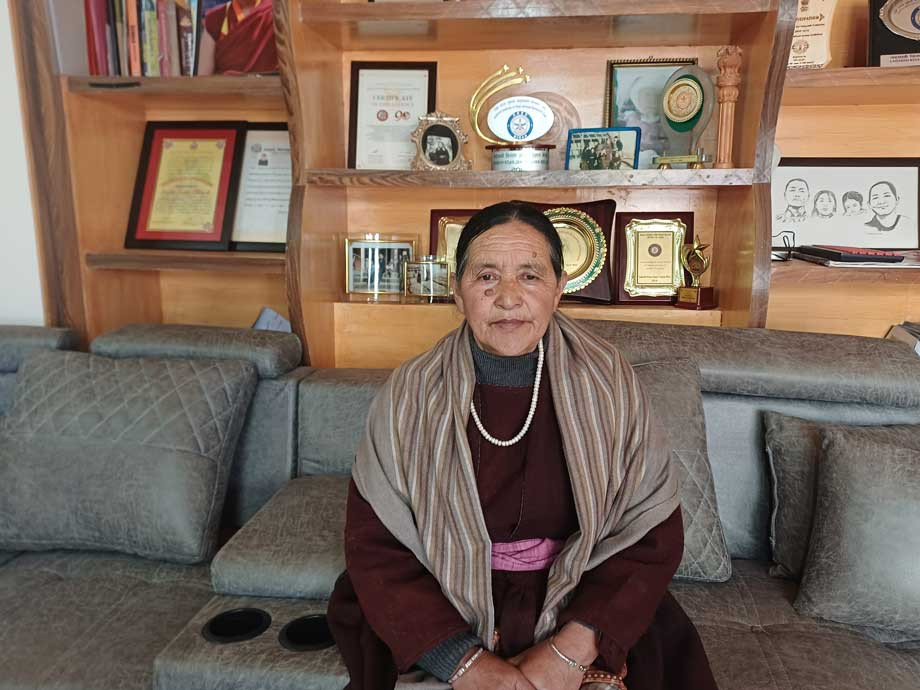
Q. Congratulations on receiving the State Award 2026 under the Entrepreneurship and Progressive Farming category. How do you feel?
Jullay, and thank you for giving me the opportunity to share my views and opinions. I sincerely express my gratitude to the Administration of UT Ladakh, the concerned departments, and all the officers for recognising the work of farmers and encouraging us to continue working with greater passion and enthusiasm.
I would also like to extend my heartfelt gratitude to my family members, who have worked equally hard and supported me at every step, ensuring that our livelihood continued smoothly. This award motivates me to do even more in the field of agriculture. I believe such recognition not only encourages an individual but also inspires many others in Ladakh who are associated with agricultural practices to work with renewed dedication and confidence.
Q. Brief us about your work.
Earlier in Ladakh, only limited crops such as barley, peas, and turnip were cultivated. However, with time, there has been a significant transformation in agricultural practices. With new innovations, improved techniques, and greater exposure, farmers in Ladakh are now cultivating a wide variety of vegetables.
On my farm, I grow different kinds of vegetables including bottle gourd, summer squash, onion, potatoes, cauliflower, cabbage, knol khol, Kashmiri saag, leafy vegetables, and turnip, among others. I have adopted multiple cropping practices and currently take two crops in open fields and four crops annually in greenhouses.
I have six greenhouses of various sizes. For the winter season, I begin sowing leafy vegetables such as spinach, Chinese cabbage, and coriander in November. These crops are ready for harvest by February and are then sold in the market. From March onwards, I raise nurseries in the greenhouses and later transplant crops such as tomatoes, brinjal, and capsicum. After harvesting these in September, I again sow vegetables like spinach and cabbage, which are ready for harvest by the end of October. In this way, I am able to cultivate four crops in a single greenhouse each year.
In addition to vegetables, I also produce flower seedlings, including gladiolus, gazania, rose, snapdragon, zinnia, marigold, godetia, carnation, and geranium.
Q. Not just crops, you also focus on seedlings and nursery cultivation. Can you brief us about it?
Seedling and nursery preparation is both feasible and highly important. Earlier, we used to procure seedlings from the nursery farm of the Agriculture Department, Leh, and from DIHAR. However, obtaining sufficient seedlings from these sources was time-consuming. Moreover, procuring seeds from other states like Delhi was expensive.
Therefore, I decided to start producing my own seedlings and nursery plants on about two kanals of land. This not only helps meet the requirements of my own vegetable cultivation but also allows me to sell surplus seedlings in the market for income generation.
Out of the total seedlings I produce, around 20 percent are transplanted into my own fields, while the remaining 80 percent are sold in the market. Through this initiative, I generate an annual income of approximately ₹2.5 lakh.
Many farmers have been inspired by my work and have started producing seedlings themselves. The seeds and seedlings produced locally in Ladakh are of good quality, and we have received no complaints so far.
Q. What are the challenges faced by the farmers of Leh?
One of the main challenges faced by farmers in Leh is the non-availability of a proper market space to sell farm produce. In earlier days, farmers from different parts of Ladakh could sell their products in the main market area. However, with development and changing regulations, they are no longer permitted to sell their produce there.
It is very important to have a designated marketplace where local farmers can directly sell their produce. At present, many farmers are forced to sit along roadsides or on small footpaths, often in crowded conditions, to sell their goods. They struggle significantly under such circumstances.
This situation has adversely affected income generation, and as a result, many farmers feel discouraged from continuing agricultural practices. Providing proper market infrastructure would greatly support and motivate local farmers.
Q. Today many educated youths do not prefer to work in fields or pursue sustainable living. What is your opinion on this?
Yes, it is true that very few young people today take interest in farming or wish to continue the ancestral way of life. While education is extremely important, there should be a healthy blend of modern knowledge and traditional practices.
If educated individuals engage in agriculture, they can bring significant positive changes to the sector. With better awareness, skills, and exposure, they can introduce new ideas, adopt modern technologies, improve productivity, and explore wider markets. The scope of income generation also increases when farming is approached with innovation and proper planning.
Agriculture should not be seen as a backward profession; rather, it has immense potential if combined with education, entrepreneurship, and sustainable practices.
Q. To promote organic farming, you not only cultivate crops but also rear livestock. In Leh, many people have given up livestock rearing, and some are even abandoning it. What would you like to say about this?
For organic farming, the use of compost is essential, and for that, a farmer must have a sufficient number of livestock. I currently rear five cows and 35 sheep. Using cow dung and sheep manure, I prepare compost with the help of waste decomposer solutions and other organic materials. This provides natural and nutrient-rich manure for my fields.
Nowadays, people easily get products like milk, curd, and butter from the market, which has led many to give up livestock rearing. However, livestock plays a crucial role in sustaining organic farming practices. Without animals, it becomes difficult to maintain soil fertility naturally.
At the same time, it is equally important to have a proper market system to sell organic produce. If farmers are assured of good returns and market access, more people will be encouraged to continue both livestock rearing and organic farming.
Message to the readers
“Agriculture is our identity and the backbone of sustainable living. I urge the youth to combine education with farming and adopt modern techniques to make it profitable and innovative. With dedication and the right support, we can strengthen local food production and build a self-reliant Ladakh.”
-
 Reach Ladakh Skara Yokma, Airport Road, Near Councillor Quarter, India.


© 2018 Reachladakh. All rights reserved.
Web designs By : India Internet