


In Conversation with Tashi Angchuk: A lifetime of service to Ladakhi patients
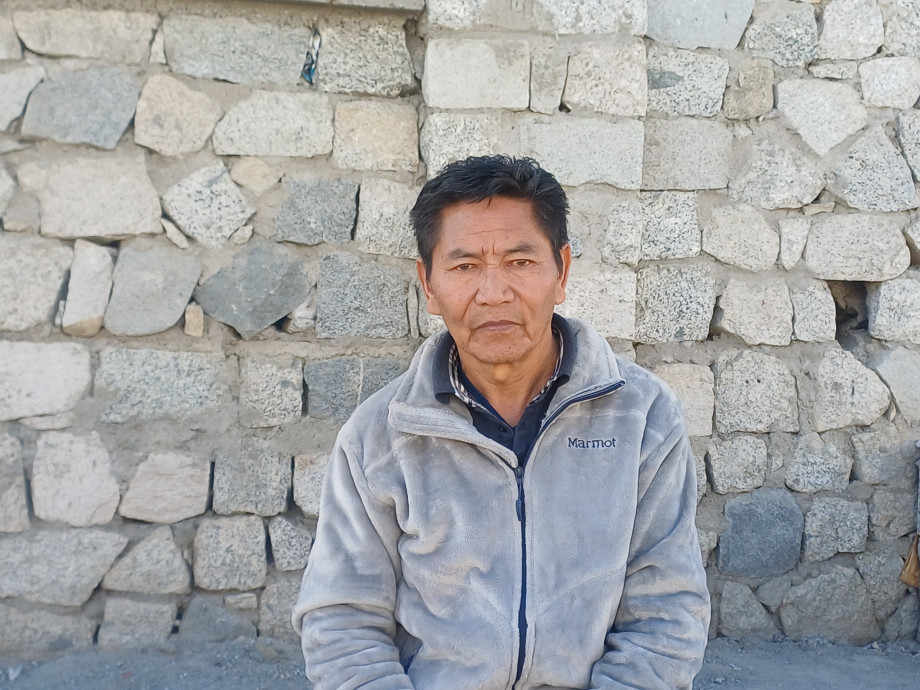
Q. You have been working for Ladakhi patients for decades. Can you share how this journey began and evolved over the years?
I have been involved in social welfare work since 1977. At the time, I was running a small business that required frequent travel to Delhi, and alongside that, I began helping Ladakhi patients who had come there for treatment. What started as a small effort gradually turned into a long-term commitment.
In 1987, I met the late Ven. Lama Lobzang, which became a turning point in my journey. I started working closely with him to support patients from Ladakh. In those days, the number of patients was relatively low, and most were referred to Chandigarh for treatment. Later, when Lama Lobzang began staying in Delhi, patients were increasingly referred there instead.
During that period, student unions in both Chandigarh and Delhi played a vital role. They helped arrange blood donations, assisted with travel, and supported patients in many other ways. Their contribution was invaluable in ensuring that patients from Ladakh received timely care and assistance.
Q. How did working with late Ven. Lama Lobzang influence your work, and how has support for Ladakhi patients evolved over the years?
Working with late Ven. Lama Lobzang was a great source of motivation for me to dedicate myself to the welfare of people in need. His efforts made a significant difference—because of his initiative, patients from Ladakh were able to access treatment and medication more easily at major institutions like All India Institute of Medical Sciences.
Over the years, the number of patient referrals has increased considerably compared to earlier times. Alongside this, many individuals and organisations have come forward to support patients selflessly. For instance, Mila Tiles has been providing free accommodation to patients in Delhi. Similarly, a Geshe from Basgo has also arranged lodging facilities for those in need. In addition, many patients continue to stay at Ashoka Mission, which has become an important support base for Ladakhi patients undergoing treatment.
Q. What kind of support do you and your team provide to Ladakhi patients referred outside the region for treatment?
Our work is primarily focused on easing the burden on patients and their families during a very difficult time. Doctors at Sonam Norboo Memorial Hospital inform us whenever a patient is referred outside Ladakh. From there, we coordinate with our team in Delhi to facilitate their further treatment.
We assist patients with all necessary documentation, guide them through procedures, and provide counselling, especially to those who are critically ill. We also make them aware of various government schemes they can avail to reduce their financial burden. Our aim is to ensure that patients and their families feel supported and are able to focus on recovery without being overwhelmed by logistical and financial challenges.
Q. How have disease patterns and health concerns in Ladakh changed over the years?
Earlier, the number of patients from Ladakh was relatively low, and the range of diseases was limited. Most cases we encountered were related to heart conditions. However, over the years, there has been a noticeable rise not only in the number of patients but also in the variety of illnesses.
Today, we are seeing a significant increase in cancer cases being referred outside Ladakh. Considering the small population of the region, the number of such cases is quite high and continues to rise each year, which is deeply concerning. This trend may be linked to changing lifestyles and dietary habits.
In addition to this, cases related to heart disease and other health issues have also increased. Road accidents have become another major concern, with many cases resulting in serious consequences. Accidents occurring under the influence of alcohol, in particular, have emerged as a significant issue that needs urgent attention.
Q. How have the challenges faced by patients changed over time?
The challenges faced by patients today are much fewer compared to earlier days. In the past, patients struggled with accommodation and there was a lack of support systems in cities like Delhi. It was often difficult to find assistance during treatment.
Today, the situation has improved significantly. There are several government schemes that help ease the financial burden on patients, along with better accommodation facilities. In addition, there is a strong network of support, including blood donors and volunteers who come forward to help. Overall, access to care and support has become much more organised and accessible than before.
Q. What keeps you motivated to continue this work after so many years?
I have been helping people for a very long time, and now I have reached a stage where I simply cannot think of giving it up. Helping others gives me immense satisfaction. Seeing someone receive support and relief from their suffering brings me a deep sense of inner peace.
I spent around 15 years in Delhi assisting patients, and I continue this work now in Leh. Over time, I have become so deeply involved in this service that it feels like a part of who I am. It is not just something I do—it is something I cannot let go of.
Q. What is your view on public donations and crowdfunding for patients in need?
Donating to patients in financial need is a deeply compassionate act, and it is something we should all be encouraged to do. However, it is equally important that such support is guided by proper verification. Before contributing, there should be consultation with doctors to understand the treatment cost, case history, and actual requirements.
In today’s social media-driven world, we often see donation campaigns being circulated widely. While many are genuine, there have also been instances where funds are misused. If such practices continue, they may eventually undermine trust and make it harder for genuinely needy patients to receive support.
Therefore, it is very important to ensure transparency and authenticity by consulting medical professionals and verifying details before initiating or contributing to any donation effort.
Message to Readers
“Help those in need with compassion, but also with responsibility. Always verify medical cases before donating so that genuine patients receive the support they truly deserve.”
.
-
 Reach Ladakh Skara Yokma, Airport Road, Near Councillor Quarter, India.


© 2018 Reachladakh. All rights reserved.
Web designs By : India Internet