


In Conversation with Stanzin Shayan: From music to social service
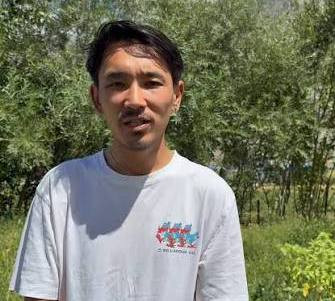
Q. Tell us about yourself and your singing journey.
First of all, I would like to express my gratitude to my parents for trusting me, encouraging me to pursue what I wanted, and recognising my capabilities.
I am Stanzin Shayan from Padum, Zanskar. I studied up to Class 2 in Zanskar, Classes 3 to 5 in Shimla, and Classes 6 to 12 at Upper TCV Dharamshala.
I have loved singing since childhood and was always encouraged by my family and those around me to sing. I participated in various programmes during my school years, which helped me develop my confidence and passion for music.
I pursued my higher education in Delhi, where I gained immense exposure and had many valuable learning experiences. That exposure also helped me grow as an artist and understand music from different perspectives.
Today, I continue to pursue my passion for singing, and I am deeply grateful to everyone who listens to my songs and has shown me so much love and support.
Q. Apart from singing, you have been involved in social welfare work for the past four years. Recently, you started the ‘Gosdom Nasjal’ initiative. Tell us about it.
Last year, my brother Stobdan from Zanskar, who lives outside India, contacted me and suggested that during the winter we should distribute ration to needy people living in remote areas of Zanskar. He provided financial support for the initiative, and along with my friend Mingyur, I identified people who needed assistance and distributed ration to them.
While distributing ration during the winter months, I had a casual conversation with an elderly woman. She told me that nowadays, many people travel outside Ladakh for pilgrimage during winter. She said she had reached an age where she felt she could die at any time, but she had never had the opportunity to travel outside Ladakh for pilgrimage. She told me that if she could get the chance to go on a pilgrimage even once, she would have no regrets before she died.
Her words deeply touched me and stayed with me. I kept thinking about what she had said and realised that there may be many elderly and financially vulnerable people in Ladakh who have never had the opportunity to travel outside the region for pilgrimage. I felt that I could try to help such people. That is how the idea of ‘Gosdom Nasjal’ came about.
The vision is to make this a long-term initiative and provide an opportunity for people who cannot afford to travel outside Ladakh for pilgrimage in their lifetime. The pilgrimage will be completely free of cost and will cover places such as Dharamshala, Nepal, Bhutan, Bodh Gaya and Varanasi over a period of around two months.
Although the initiative was started by me, it has only been possible because of the support and generosity of people who believe in helping those in need. When I initially started thinking about it, I was unsure whether I would be able to make it happen. But with time, effort and the support of others, we are now able to take around 15 people on pilgrimage.
The pilgrims are being selected from different parts of Ladakh. They are generally between 55 and 70 years of age, financially weak, have limited family support or no one to take care of them, and have never had the opportunity to travel outside Ladakh for pilgrimage.
Through Gosdom Nasjal, our aim is not only to take people on a pilgrimage but also to give them an experience and an opportunity they may have wished for throughout their lives.
Q. As an artist, why did you feel the need to contribute to society?
Whatever I am today is because of the love and support I have received from the people. People have listened to my songs and given me so much love, respect and encouragement. The fact that I am known today as Stanzin Shayan is largely because of the people of Ladakh.
I have always felt that it is also my responsibility to think about how I can give back to society and contribute something meaningful to the people. I believe that when people give you so much love and support, you should also find ways to return that love through your actions.
There are many artists and social media influencers in Ladakh today. I feel that we are, in many ways, the voice of the people. We have a platform and an audience, and whenever people are in need or when an issue needs to be highlighted, we should use our voice to speak up and stand with them.
I try to do my bit in whatever way I can—whether through my music, social work or by speaking for people who may not have a platform of their own.
I would also like to appeal to the youth of Ladakh to actively participate in different activities, take up new opportunities and gain experience and exposure. There is a lot to learn outside our comfort zones, and young people should come forward, contribute to society and make the most of the opportunities available to them.
Q. You have been involved in social work and have spoken about giving back to society. As someone from Zanskar, how do you view the region’s development in recent years, and what do you think should be the priorities for its future?
I do not belong to any political party and I am not a supporter of any particular political ideology. However, I must say that Zanskar has witnessed significant change and entered a new era of development during the BJP rule. I would like to express my gratitude to all the visionary leaders of Zanskar who, keeping political ideologies aside, have worked for the welfare and development of the people.
I would also like to acknowledge the contribution of former MP Jamyang Tsering Namgyal, who worked for the people of Zanskar, as well as other BJP leaders who contributed to bringing development to the region.
Amidst all these developments and changes, one thing that I particularly want to highlight is that Zanskar has remained culturally rooted. Our traditions, customs and rituals have largely remained intact, and it is important that we preserve this identity as we move forward.
I appeal to the people of Zanskar to work together towards sustainable development. We should promote tourism in different parts of Zanskar rather than concentrating it in a few areas, so that people living in far-flung villages can also benefit economically. At the same time, we must ensure that our culture and traditions are passed on to the younger generations.
I especially appeal to the youth to learn about our traditions and culture from the elders and take pride in where we come from. At the same time, I request our senior citizens and elders to place their trust in the younger generation and give them opportunities to take leadership roles.
There are often doubts about the capabilities of young people, and some may hesitate to give them responsibility. But I strongly believe that educated and capable youth can bring positive change. They need the trust, support and opportunities to lead and contribute to the future of Zanskar.
Message to the readers
I appeal all youth, to take pride in our culture and traditions and learn from our elders. I encourage the youth to come forward, take responsibility and contribute to society. Whatever success we achieve, we should never forget the people who supported us and always find ways to give back.
-
 Reach Ladakh Skara Yokma, Airport Road, Near Councillor Quarter, India.


© 2018 Reachladakh. All rights reserved.
Web designs By : India Internet