


In Conversation with Kunzes Angmo: Documenting Ladakhi Food Traditions
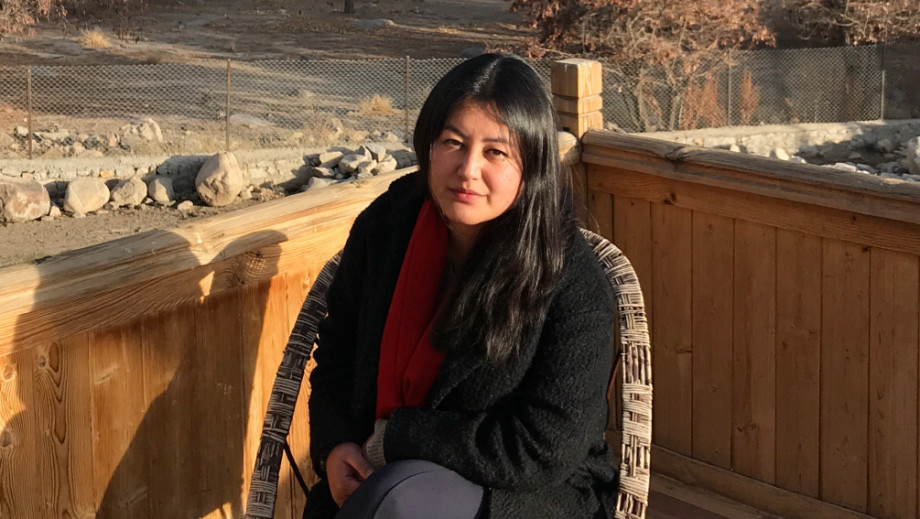
Q. Can you tell us about your early life, what inspired you to pursue traditional Ladakhi cuisine, and how your journey began?
I was not born or raised in Ladakh—I was born in Srinagar. My family comes from a professional background, with many members, including my parents, working in fields like medicine and administration. My mother, in particular, spent a significant part of her career on deputation outside Jammu and Kashmir, in places like Punjab and Uttar Pradesh. As a result, we grew up moving between different regions.
Despite living away from Ladakh, my mother was very intentional about keeping us connected to our roots through food. Traditional Ladakhi dishes were a regular part of our meals, and in hindsight, I realise that this was her way of preserving our identity and sense of belonging.
My grandfather also played an important role in shaping this connection. He ensured that his children grew up eating simple, traditional Ladakhi food—even dishes that were not commonly consumed in urban settings. That emphasis on food as a cultural anchor stayed within the family and eventually reached my generation.
I moved to Ladakh only after my marriage. I married into a farming and hospitality family—one that had established one of the earliest hotels in the region.
This gave me my first exposure to food at a commercial level. At the same time, my husband’s family follows a deeply traditional lifestyle. They continue to grow their own food, rear cattle, and sustain a system closely tied to the land. Living in such an environment was transformative for me because it was very different from how I had grown up.
Over time, I began to reflect more deeply on identity—especially during my years studying in Delhi and later through my visits to Ladakh. I realised that Ladakhi cuisine was often not seen as aspirational. At weddings and social gatherings, it was usually replaced by North Indian or Kashmiri dishes. Food, after all, is closely linked to perception and status, and somewhere along the way, Ladakhi cuisine had been sidelined.
This realisation led me to research trans-Himalayan food identity around 2018. During this process, I discovered that there was very little documentation on Ladakhi food traditions. Much of my research happened during the COVID period, which made it even more challenging. Conversations had to be conducted over the phone, and it was often difficult to find people willing to share knowledge.
That was when I understood the importance of not just documenting, but also representing Ladakhi cuisine authentically. What we often see today is a diluted version of the food culture. There is a tendency to label Tibetan dishes as Ladakhi, which risks erasing the uniqueness of our own culinary heritage.
This understanding led me to begin curating small, narrative-driven dining experiences centred on authentic Ladakhi cuisine. These are intimate, multi-course meals where food becomes a medium to discuss history, ecology, religion, and climate. For me, this work is not just about cooking—it is about reclaiming identity and preserving heritage.
Q. How did you learn the art of Ladakhi cooking—through family traditions or formal training?
My learning has been entirely rooted in lived experience. Whenever people ask me to train others in Ladakhi cuisine, I often tell them that the richest knowledge already exists within their own homes. Our elders carry generations of culinary wisdom, and they are the most authentic teachers.
In my case, I learned from my grandmother, my in-laws, and by closely observing family practices. My mother, though deeply connected to Ladakhi food, had a demanding career as a doctor and public health specialist, so she wasn’t always in the kitchen. My grandmother, however, was a strong influence. She didn’t teach in a formal way, but she guided and instructed me. She comes from the Srangar family, which historically had ties with Tibet.
I am married into the Kalon family, which has historical connections with Central Asia, particularly regions like Khotan and Yarkand. These are not distant histories—they are lived narratives passed down through generations. My grandmother would recall how families like hers hosted Yarkandi traders in Leh. The Yarkandi pulao that I cook today is based on her memory of how it was prepared when she was a child—something incredibly rare and valuable today.
In traditional households like the Kalon family, food practices remain deeply rooted. Even today, meals follow generational rhythms—breakfasts alternating between dishes like kholak and khambir, made from local, homegrown ingredients. Food is not occasional or performative; it is part of everyday life, deeply tied to the land.
For me, perspective played an important role. Although I am Ladakhi, I grew up largely outside Ladakh. So when I returned after marriage, I experienced these traditions almost as an outsider—observing them with fresh eyes. I began asking questions, documenting practices, and understanding the deeper context behind everyday food.
A particularly formative phase was my time in Nubra after becoming a mother. That is when my relationship with food became more intentional. During harsh winters, when fresh produce is scarce, you rely on traditional knowledge—sun and shade drying, root cellaring, and seasonal preservation. Ensuring nutritious food for my child made me realise how relevant and sophisticated these systems are.
Before that, I had always eaten and even cooked Ladakhi food, but I hadn’t reflected deeply on it. It was only through lived experience that I began to truly understand its meaning.
For me, Ladakhi cuisine is not just about recipes—it is about memory, survival, ecology, and identity. And the most authentic learning comes not from institutions, but from lived traditions within our own homes.
Q. What challenges did you face while establishing yourself, and how has your journey evolved over the years?
After motherhood, I began taking this work seriously. That was when I started documenting traditional food practices and curating intimate dining experiences to present an honest narrative of Ladakhi cuisine—free from commercial pressures.
Although my husband is in hospitality, I realised early on that the hotel industry was not the right fit for me. It requires a certain temperament and constant engagement at scale. I chose instead to work in a more intentional, limited format. My dining experiences are small, curated, and mostly word-of-mouth, with around 60 tables a year. This allows me to engage meaningfully with people who are genuinely interested.
At the same time, my journey into food processing began organically. During our time in Nubra, we started working with farm produce—especially apricots—making conserves, pickles, and juices for personal use and for the hotel. I realised I enjoyed this process and began researching preservation techniques, particularly from regions with climates similar to Ladakh. You cannot apply mainstream methods from the plains here; the ecology is entirely different.
This led to experimentation and eventually to developing products like apricot conserves—low in sugar, retaining the fruit’s natural texture—essentially preserving the flavour of Ladakhi summer in a jar. Initially, this was for my own family, especially my children, but it gradually evolved into something larger.
In 2021, I formally established Ladags Earth Agro Foods Private Limited. Production began in earnest in 2022, but we have consciously kept the scale small—around two to three metric tonnes annually. Most of our products are consumed within Ladakh, with some distribution across India through a Delhi-based logistics partner. Growth has been organic, without advertising, and we prefer to maintain quality and balance over rapid expansion.
I also began doing pop-ups, though reluctantly at first. Over time, I realised that Ladakhi food is underrepresented in the larger narrative of Indian cuisine. Our food is as Indian as dal, roti, or chawal, yet it is often reduced to stereotypes like momo and thukpa.
That is why every pop-up I do is narrative-driven. It is not just about serving food, but about telling the story behind it—its ingredients, seasonality, preservation techniques, and cultural context. In places like Kerala and Mumbai, these experiences have been very well received, often selling out. The idea is to use food as a medium to help people understand Ladakh—its land, biodiversity, and traditions.
After these initial pop-ups, I took a break due to a high-risk pregnancy and early motherhood. This recent phase marks my return after nearly three years.
Looking back, my journey has evolved slowly and organically. It has been shaped not just by professional choices, but also by personal milestones. At its core, it remains about preserving heritage, staying connected to the land, and sharing that story in a meaningful way.
Q. Tell us about Artisanal Alchemy
Artisanal Alchemy began with a simple yet deeply personal idea—to preserve, in a jar, the essence of a Ladakhi summer. It was about capturing that familiar tangy-sweet flavour of apricots and making it available on our table throughout the year, while also honouring the heritage of the fruit itself. Many of the apricots we use come from nearly 200-year-old trees in our garden in Nubra, and there was also a practical need to utilise this abundant produce, which would otherwise go to waste.
The concept first took shape around 2018, when I began experimenting with apricot preserves at home. What started as a basic attempt at making jam gradually evolved into something more nuanced. I began adapting recipes, techniques, and processes—both traditional and contemporary—from different parts of the world, and reworking them to suit Ladakh’s unique ecology, produce, and sensibilities. The focus has always been on creating simple, honest, farm-driven food using ingredients sourced directly from our own land.
In 2021, the venture was formally incorporated under Ladags Earth Agro Foods (OPC) Pvt. Ltd., marking our entry into the retail space with Artisanal Alchemy conserves and curated products. Everything we produce is small-batch, handcrafted, and rooted in an artisanal approach. From picking and sorting to cutting, cooking, bottling, and packaging—each step is done manually, often on the same day, to preserve the freshness and flavour of the fruit.
Since we work with fresh, seasonal produce, our offerings are inherently limited and change throughout the year. At present, we have a small batch of apricot conserve available, which has successfully cleared quality testing at Equinox Labs, Mumbai, and has a shelf life of up to 36 months.
Our next cycle of production begins with the fresh apricot harvest in mid-July. Looking ahead, we plan to introduce a few more niche, seasonal products, always staying true to our core philosophy—preserving the authenticity, flavour, and integrity of Ladakh’s produce.
Q. What changes have you observed in food habits in Ladakh over the years?
When I was growing up in a joint family in Leh, food was deeply traditional and rooted in sustenance. Meals were hearty and consistent—breakfasts often included khambir, kholak, and even meat like(frozen or minced meat). Nutrition was taken very seriously, and as children, we were encouraged to eat organ meats like liver and kidney, especially in a household with growing children and women who were pregnant or lactating.One constant in our home was namthuk. My father has had it every day since childhood, and that habit continues even now, regardless of where we are.
That tradition has carried forward to the next generation—my children, too, have grown up eating it daily. It reflects how food was not just about taste, but about nourishment, continuity, and habit.
After marriage, I became part of another traditional household where practices like growing food, maintaining livestock, and seasonal eating are still followed. In such homes, food remains closely tied to the land.
However, over the years, I have seen significant changes across Ladakh. Even within families, food habits have become more mixed. At my parents’ home, for instance, there is a blend of Ladakhi and other regional influences, and in many households today, traditional food is no longer part of everyday life.
This shift is natural. Earlier, most families relied on subsistence agriculture and lived in joint setups—growing their own barley, vegetables, herbs, and maintaining livestock. Today, with changing professions, nuclear families, and busier lifestyles, food habits have evolved accordingly.
It is not about judging these changes as good or bad—food culture is always evolving. For example, rice was once rarely consumed in Ladakh but has now become a staple in many households.
At the same time, I don’t believe in being prescriptive about food or suggesting that people must return to tradition in a rigid way. What I do find encouraging, however, is that there is a renewed interest in Ladakhi cuisine today—especially among the younger generation and even within the commercial space.
Many older hotels, which traditionally catered to international tourists, have long served Ladakhi food. Now, even newer restaurants and establishments are beginning to include it on their menus. That in itself is a positive shift.
That said, I do feel there is still room to do greater justice to the cuisine. One of the key challenges is the blurring of distinctions between Ladakhi and
Tibetan food, which are often presented as interchangeable, even though they have evolved differently.
For instance, the use of red chilli is not historically part of Ladakhi cuisine, whereas it became more prominent in Tibetan food due to earlier exposure through trade routes connected to eastern regions like Sichuan. Similarly, things like red chilli chutneys are now often assumed to be traditional, when in reality they are not part of Ladakhi home cooking.
Despite these nuances, it is heartening to see people in both Leh and Kargil increasingly reclaiming and engaging with Ladakhi food. What is equally important is the growing understanding that food is cultural, not religious. It predates religion—it is shaped by land, climate, and community. Hunger is universal, and what we eat is ultimately a reflection of what our environment sustains.
This also means that if we do not consciously preserve traditional food practices, future generations may grow up assuming that what they eat today is what has always been “traditional.” Food is an important part of intangible cultural heritage—it carries memory, identity, and a sense of belonging.
For me, observing these changes has been an important part of my journey—understanding how food evolves, while also recognising the need to document and preserve what might otherwise be lost.
Q. How can Ladakhi cuisine contribute to boosting tourism?
Ladakhi cuisine can play a powerful role in tourism by offering visitors an authentic experience of the region’s culture, climate, and way of life. Today’s travellers are looking for more than just sightseeing—they want to connect with a place, and food is one of the most meaningful ways to do that.
If presented with authenticity and context, Ladakhi food can become a key part of that experience. However, it is often reduced to a few dishes like momo and thukpa, which does not reflect its true diversity. There is a need to showcase traditional ingredients, techniques, and stories more accurately.
Experiences like curated meals, homestays, and farm-based tourism can help visitors engage more deeply with local food culture while also supporting communities. If done thoughtfully, Ladakhi cuisine can become a strong cultural anchor for tourism—one that is both enriching for travellers and sustainable for the region.
Q. What message would you like to give to young people aspiring to work in food or hospitality?
I would say—first, take the time to understand yourself. Know what you enjoy, what you are good at, and what truly makes you happy. You don’t have to follow a fixed path or do what everyone else is doing.
There is no one definition of success. You can work in a structured profession, or you can build something independently as an entrepreneur. What is important is to choose something you can stay committed to in the long run.
Also, don’t feel pressured to do everything at once. It’s equally important to know what you don’t want. When you understand yourself clearly, your decisions become easier, and your path becomes more meaningful.
Message to the readers
Food is more than sustenance—it is a reflection of our identity, culture, and history. As traditions evolve, it is important to appreciate and preserve the stories behind what we eat. By valuing local cuisines, we keep our heritage alive for future generations.
-
 Reach Ladakh Skara Yokma, Airport Road, Near Councillor Quarter, India.


© 2018 Reachladakh. All rights reserved.
Web designs By : India Internet