


Aryan Valley Festivals: Preserving Tradition and Identity
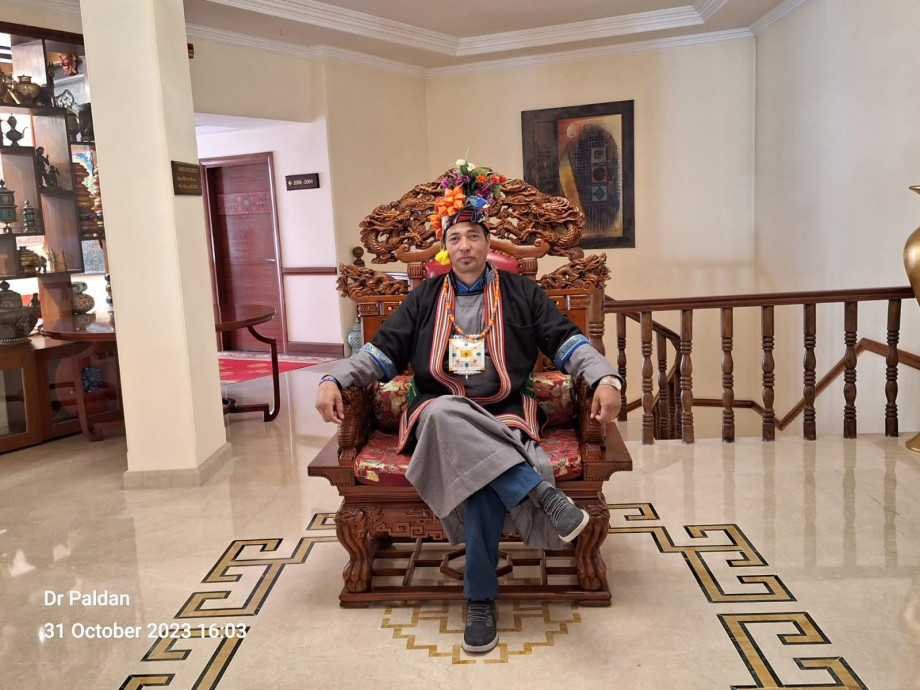
The Aryan Valley—comprising villages such as Darchik, Garkone, Dha, Byama and Hanu—is home to one of the region’s most distinctive Indo-Aryan communities, considered among the earliest inhabitants of Ladakh. Often referred to as Brokpa or Drokpa (Dardic Aryan), the people have preserved unique linguistic, ritual and social traditions through the ages. Festivals here are not merely events; they are acts of collective prayer, kinship affirmation and cultural preservation—each one a living chapter in the story of a civilisation that has endured across millennia.
Six major celebrations mark the Aryan calendar, each rooted in the rhythms of nature, kinship and devotion. Losar welcomes the New Year with fire, song and rites of passage. Spetses honours paternal kin through feasting and genealogical songs. Bee blesses the first ploughing and invokes protection for the young. Bono Nah, the “great harvest,” rotates every three years among three villages in a celebration of abundance and shared heritage. Manthana gives thanks for the millet harvest in Darchik. Together, Snolha and Nah frame the summer—the first marking the movement of livestock to high pastures, the second the tasting of the season’s first barley.
At the heart of every festival stands the Labdagpa, the village priest. His hereditary role is entrusted with the worship of the village deity (Boonu Lhah) and the performance of rituals that sanctify each celebration. Before any festival, he undergoes physical and spiritual purification—abstaining from certain foods, avoiding contact with other communities and wearing traditional white attire. His actions are believed to maintain the sacred boundary between the human and divine realms, ensuring that prayers are heard and blessings bestowed. In the past, the opening of festivities included the sacrifice of a baby goat; today, in keeping with the community’s Buddhist practices, that custom has been abandoned, though the ritual structure and symbolic distribution of food remain as echoes of older traditions. From Losar to Bono Nah, from Bee to Manthana, the Labdagpa’s presence weaves a thread of continuity, connecting each festival to the spiritual heritage of the Aryan community of Ladakh.
Losar – The New Year Festival
Spanning over a week, Losar in the Aryan Valley follows a rhythm distinct from the Tibetan style Losar celebrated elsewhere in Ladakh. The festival begins with Cha Phetispo, a day of fire throwing. Male members from every household gather at Dumalsa, a designated open ground, carrying torches or flaming bundles. The fire procession is believed to purify the village and drive away misfortune. Throughout the night, participants sing a prescribed sequence of traditional songs known as Sildusi Goi; completing the entire set is considered essential for the ritual’s success.
The following day, men attend the Larah ceremony, a worship ritual dedicated to the Phaspoondeity, associated with protection and lineage. Meanwhile, women decorate their homes and prepare for Tsesphag—a day of visiting every household. During Tsesphag, community members exchange Mala greetings, which are more than simple salutations: elders place their hands on the heads of younger visitors, imparting blessings for health and prosperity. At each house, special dishes—often traditional multigrain breads and butter tea—are served by the elder members of the household.
A particularly distinctive day is LopiNakhilispo, which honour the Dinpas—individuals who have reached an age that is a multiple of twelve (12, 24, 36, and so on). Reaching such an age is seen as a spiritual as well as personal milestone. The Dinpas are escorted from their homes in ceremonial processions complete with khataks (ceremonial scarves), specific songs, and ritual gestures, mirroring the formality of a wedding and symbolising a “rebirth” into a new stage of life. They are led to a central gathering place, where the village head singer guides the performance of Dinpa songs.
Over the next three to four days, the Dinpas gather in traditional attire adorned with khataks. Male Dinpas perform the Prasula dance, wielding swords in a display that evokes both martial heritage and protective blessings. They also showcase the Nimaskore dance, a more graceful, coordinated counterpart. The songs and dances are led by the village head singer, an oral repository of verses that can number in the hundreds.
The final day of Losar, Lhah Skyl (“seeing off the deity”), closes the sacred circuit. The community believes that deities have attended the celebrations as honoured guests. A short comedic or allegorical play—unique to each village—is performed, followed by Lhah Skyl songs that formally bid the deities farewell, bringing the NewYear festivities to a close.
Poetic reflections: Losar- When the Year Turns
When winter stars are newly cast,
the torches wake the valley’s past.
From Dumalsa, fire lines race—
old songs outrun the dark they face.
All night the verses, one by one,
Sildusi Goi till night is gone.
Then mothers dress the doorways wide,
and blessings flow from elder’s hand,
Mala that steadies, like the land.
Twelve turns the year, the chosenrise—
the Dinpas clad in khatak white.
With Prasula, with sword, they make us whole,
as ancestors walk into the light.
On the last day, the unseen guests
who feasted in our songs and rest
are bid farewell with Lhah Skyl play—
the old year folds, the new has sway.
Spetses – Celebrating Paternal Kin
Spetses spans three days and is dedicated to the paternal side of the family. Relatives are invited as guests of honour, and the community organises dances and songs reserved exclusively for this occasion. In the kinship structure of the Aryan Valley, maternal and paternal relations have distinct ceremonial roles; Spetses reaffirms patrilineal bonds, and the songs sung during this time often contain genealogical references, reinforcing family history through oral tradition. It is a time of feasting, dance and the joyful renewal of kinship ties.
Poetic Reflections: Spetses: Feast of the Father’s Line
Now let the fathers’ houses call,
the lineage that held us all.
We lay the hearth, we lift the door,
and sing the names of those before.
Each verse a branch, each dance a root,
the steps are old, the rhythm true.
For in this valley, stone and stream,
the father’s line is half the dream.
They come with stories, come with bread,
three days the kin are guests and fed.
And when the last tune fades to still,
our Aryan bond is iron on the hill
Bee – The Ploughing Festival
The Bee festival marks the beginning of the agricultural cycle. The Labdagpa initiates cultivation in the Beebyas fields. Infants and children up to around thirteen years of age—called Sumpa—have sattu (roasted barley flour, known locally as phatik) smeared on their faces, a practice believed to bestow strength and safeguard against illness.
Accompanied by juniper smoke and the Larnah (a tune specific to the deities of cultivation), the Labdagpa ploughs the field in an anticlockwise circle—a direction associated in local cosmology with life, renewal and the warding off of negative forces. Male participants and their children stand within the circle, symbolically placing the next generation at the heart of the community’s sustenance. A traditional dance involving the Sumpas follows the ploughing, and the celebrations continue for three more days with songs and dances that unite the community in hope for a fruitful season.
Poetic Reflections: Bee: Blessing the Furrow
Before the ploughshare breaks the clay,
the children stand within the sway.
Sattu on the forehead glows,
the old protection that the valley knows.
Juniper rises in braids of smoke;
the Labdagpa begins the chant—
Larnah that coaxes earth awake.
He walks the circle, anticlockwise,
with sons held safe within the ties.
Three days the dance goes round the field,
the promise that the soil will yield.
In every furrow, shallow and deep,
a hope the Aryan clan will keep.
Bono Nah – Festival of Grand Harvest
Bono Nah means “the greatest harvest” in the Dardiarya language. This festival lasts over five days and involves the singing of all the Bono Nah songs—a complete cycle of verses that must be performed in their entirety. It is celebrated alternately every three years, rotating among the villages of Dha, Garkone and Ganoks (lying across the Line of Control in Pakistan-occupied Kashmir). This rotational tradition reflects the deep interconnectedness of the Aryan settlements, which share lineage, language and ritual heritage.
Before the festival begins, the Labdagpa (village priest) undergoes three days of purification, remaining isolated from the rest of the community. This period of retreat mirrors the sacred preparation observed for other major festivals, reinforcing the priest’s role as a mediator between the human and divine realms. When the purification is complete, he is escorted to the gathering place with the Larnah—a musical tune dedicated to the village deity—accompanied by specific songs reserved exclusively for this occasion. The five days that follow are filled with communal singing, dance and feasting, honouring the abundance of the harvest and the blessings of the land.
Poetic Reflections: Bono Nah: The Great Harvest
Every third year, the songs return—
the verses that the elders earn.
From Dha to Garkone, the summons wide,
across the line where Aryan reside.
Three days the Labdagpa waits apart,
the sacred held within the heart.
Then Larnah rises, the escort song—
the great harvest calls, and we belong.
Five days the circle holds its peace,
the songs complete, their echoes cease.
For when the last note fades to air,
the valley stores its wealth in prayer.
Manthana – The Millet Harvest
Manthana is celebrated in the village of Darchik during the last week of October each year. This festival marks the harvesting of the final crop of the season: millet. Lasting three days, Manthana involves singing all the songs associated with the festival—a repertoire that praises the deities of Aryan, acknowledging their role in sustaining the land and its people.
Unlike Bono Nah, which rotates among villages, Manthana is an annual celebration unique to Darchik, yet its themes of gratitude and reverence echo across the valley. The millet harvest, coming at the close of the agricultural year, represents both completion and thanksgiving, and the songs performed during these three days weave together devotion, seasonal reflection and communal joy.
Poetic Reflections: Manthana: The Millet’s Gift
In Darchik, when October nears,
the millet fields in gold appear.
Three days the songs of praise arise—
to deities in autumn skies.
The year’s last crop, the season’s close,
each verse a vow, each note a rose.
They sing of mountains and flowing streams,
and bless the land where Aryan dreams.
Snolha and Nah: Moving the Herds; Blessing the Grain
Two festivals mark the rhythms of the pastoral and agricultural year during the summer season.
Snolha celebrates the shifting of domestic animals to the upper pastures. This movement is a significant moment in the annual cycle, as livestock are taken to higher grazing grounds where they remain through the warm months. After Snolha, no animals are kept in the main village—a temporary separation that allows both the fields and the settlement to rest. The songs sung during this time are light and seasonal, evoking the freshness of summer and the beauty of alpine meadows.
Nah follows as the counterpoint, marking the harvesting of the first crop—barley. The festival lasts three days, and its central ritual involves the community tasting the first new crop in every household. This act of tasting is both a celebration of abundance and a gesture of gratitude, ensuring that the first fruits are shared collectively. The songs of Nah are filled with imagery of summer: flowers in bloom, the warmth of the sun and the ripening fields.
Together, Snolha and Nah frame the summer season as a time of movement, growth and renewal—when the community tends to both its herds and its fields, singing the land into abundance.
Poetic Reflections: Snolha and Nah: The Moving and the Mending
When summer sends the herds to roam,
Snolha sings of peaks and pastures above.
The village empties of the flock,
the songs are clear as mountain rock.
Then Nah returns when barley bends—
the first new grain, the circle mends.
From house to house, the taste goes round,
the first fruits hallow all the ground.
One marks the going, one the yield—
the summer songs of harvest and field.
In every verse, our Aryan Valley knows:
the land provides, the spirit grows.
Preserving the Intangible
The festivals of the Aryan Valley are more than annual observances—they are expressions of cultural resilience. Closely tied to the Dardiarya language (a form of Shina), now spoken by few elders, they preserve ritual knowledge and tradition. Ongoing efforts to document these practices ensure that this living heritage of language, identity and indigenous knowledge endures.
About the Author
The author is a teacher and scholar from the Aryan Valley of Ladakh. A dedicated preserver of Aryan heritage, he is not only an educator but also a folklore singer and storyteller, having collected numerous oral narratives, songs, and rituals passed down through generations. You can send your views and comment at tspalgias@gmail.com.
-
 Reach Ladakh Skara Yokma, Airport Road, Near Councillor Quarter, India.


© 2018 Reachladakh. All rights reserved.
Web designs By : India Internet