


Preserving Culture, Reviving Heritage: Himalayan Buddhist Cultural Association calls for Bhoti inclusion and Kailash Route reopening
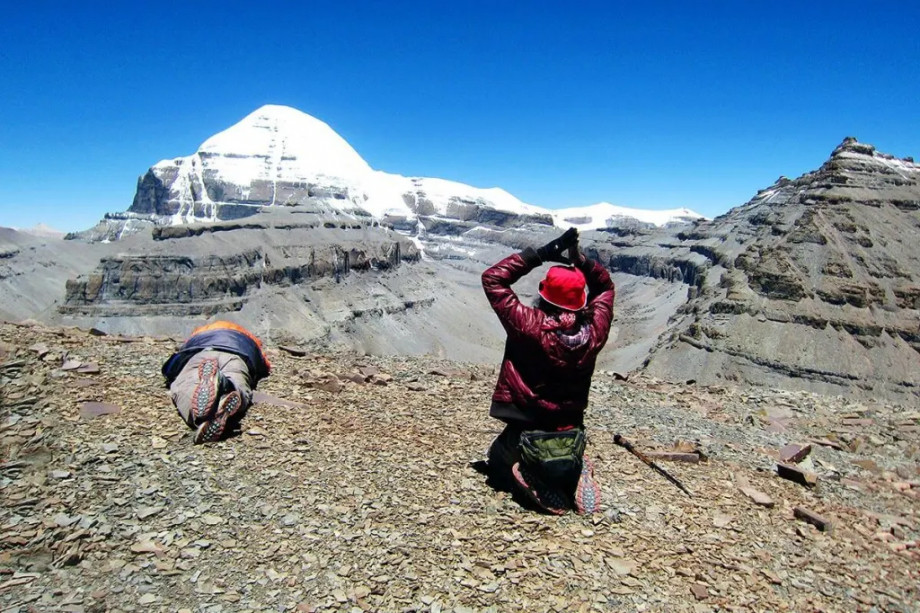
The Himalayan Buddhist Cultural Association (HBCA), Leh, has reiterated its long-standing demands for the inclusion of the Bhoti language in the 8th Schedule of the Indian Constitution and the reopening of the Kailash–Mansarovar route via Ladakh.
HBCA President, Tsering Norbu, stated that these two issues remain the Association’s primary focus, and a delegation recently met Lieutenant Governor Kavinder Gupta to present a memorandum on the matter. “He has assured us that the demands will be examined, and we are hopeful of a positive outcome,” Norbu said.
Reopening the Kailash–Mansarovar Route via Ladakh
Explaining the historical and practical significance of the Ladakh route, Tsewang Dorjay, Director of HBCA Leh, said, “In ancient times, pilgrims from India used to travel to Kailash–Mansarovar across the Himalayas through several routes—via Ladakh, Himachal Pradesh, Uttarakhand, Sikkim, and Arunachal Pradesh. For the people of Ladakh—Buddhists as well as earlier followers of the Bon tradition—the traditional route to Kailash–Mansarovar was through Chushul and Demchok. It has always been the safest and most convenient route, with no treacherous treks along the 535 km stretch from Leh to Kailash.”
He added that the route was closed after the 1962 India–China conflict and has remained inaccessible since then.
Dorjay emphasised that with improved air and surface connectivity to Leh, the Ladakh route is now the shortest, safest, and most cost-effective option for pilgrims. Once the Zojila and Rohtang tunnels are completed, Ladakh will have round-the-year road access to the Indian plains. He also noted the ongoing construction of the Bilaspur–Leh railway line, which will further strengthen connectivity.
Currently, Indian pilgrims undertake the yatra via two alternative routes:
1. Uttarakhand (Lipulekh Pass – 5,335 m)
– includes over 200 km of difficult trekking and remains vulnerable to floods and landslides.
2. Sikkim (Nathula Pass – 4,000 m)
– motorable but involves a long 1,559 km drive and a mandatory 35 km parikrama trek.
Both routes cost upwards of ₹1.8 lakh per pilgrim and require 19–22 days.
In contrast, the proposed alternative route via Ladakh involves only 535 km of motorable distance, with the same 35 km parikrama trek. For most pilgrims, the entire journey would take around 11 days, including acclimatisation.
Opening the Ladakh route, HBCA argues, will:
• allow more Indians to afford the pilgrimage,
• significantly reduce travel time and costs,
• boost regional economies in Ladakh, Himachal Pradesh, and J&K,
• and enable local residents to perform the yatra more easily.
The memorandum highlights that discussions on reopening the Ladakh route had earlier featured in two India–China summit meetings during the Atal Bihari Vajpayee–led NDA government, when both countries were reportedly close to an agreement. HBCA urged the LG to revive the matter for future bilateral talks.
Religious and Cultural Significance
Mount Kailash (Kang Rinpoche) and Lake Mansarovar (Tsom Mapam) hold immense spiritual importance for Hindus, Buddhists, Jains, and followers of Bon. Kailash is revered as the abode of Lord Shiva and is considered “the Navel of the Universe” in Buddhism. Four major rivers—Indus, Sutlej, Brahmaputra, and Karnali—originate from its vicinity, adding to its sanctity.
Bhoti Language: A case for 8th schedule recognition
HBCA reiterated the significance of the Bhoti language, spoken across the Himalayas—from Ladakh and Himachal Pradesh to Sikkim, Arunachal Pradesh, Uttarakhand, West Bengal, and parts of Baltistan.
Bhoti, written in the Tibetan script, traces its origin to the ancient Indian Sharada script. Scholars like Thonmi Sambhota studied in India to develop the script in the 9th century, linking it deeply to Indian linguistic heritage.
Bhoti already enjoys recognition in several Indian states and is taught in many educational institutions. Numerous publications and broadcast programmes are produced in the language, and study centres operate in universities across the country.
HBCA stressed that inclusion of Bhoti in the 8th Schedule would:
• Place the language under the protection and development mandate of the Government of India;
• Encourage literature, scholarship, and preservation of ancient texts—including those that survived only through Tibetan translations after the destruction of Nalanda and Vikramasila;
• Strengthen cultural identity and integration of Himalayan communities.
HBCA noted that the reopening of the Ladakh route was previously discussed during India–China bilateral talks under the Vajpayee government, and the two countries had nearly reached an agreement. The Association urged the current government to revive the issue in upcoming dialogues.
The organisation expressed strong faith in the Union Government's ability to take forward-looking decisions in national interest. “A favourable decision on these long-pending demands will be welcomed not only by the people of Ladakh but by the entire nation,” HBCA stated.
-
 Reach Ladakh Skara Yokma, Airport Road, Near Councillor Quarter, India.


© 2018 Reachladakh. All rights reserved.
Web designs By : India Internet