


LG Kavinder Gupta visits Puga Geothermal and Pang Solar Projects Reaffirms vision of carbon-neutral Ladakh; assures livelihoods of Changthang nomads will not be affected
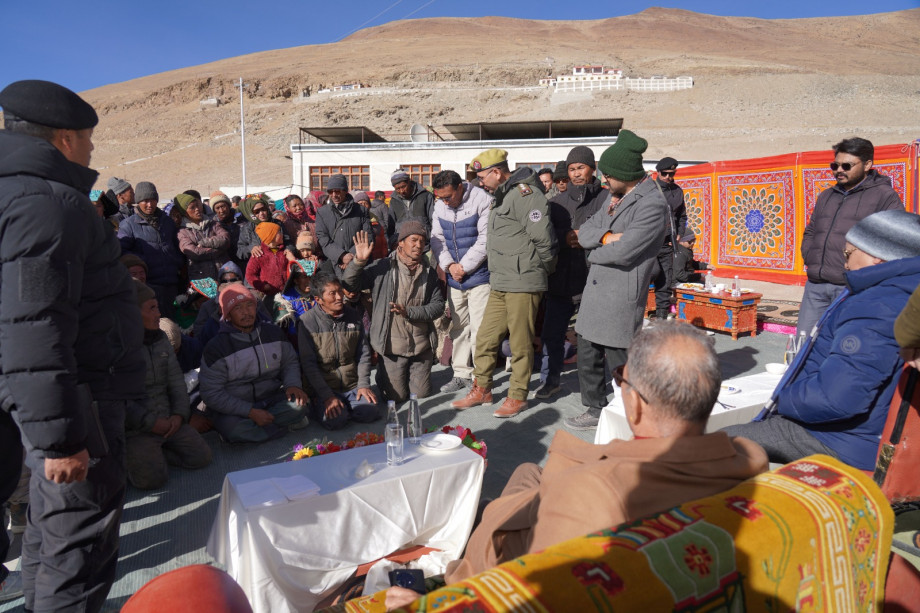
Lieutenant Governor of Ladakh, Kavinder Gupta, visited the Changthang region on December 12 to review the progress of two flagship clean energy projects—the 1 MW Geothermal Power Project at Puga, being implemented by ONGC, and the proposed 11 GW Solar Power Project at Pang, being implemented by the Solar Energy Corporation of India (SECI). Both projects are central to the vision of transforming Ladakh into a carbon-neutral region and a national hub for renewable energy, in line with the vision of the Prime Minister of India, Narendra Modi.
At the Puga hot springs, the site of the ongoing geothermal project, the Lieutenant Governor was informed that drilling up to 450 metres has been completed, with an additional 600 metres of drilling scheduled over the coming months. Two thermal wells are currently under construction to harness geothermal energy. Officials further informed him that, contrary to initial estimates, the project is now expected to generate approximately 4 MW of power instead of the originally planned 1 MW. The power generated will be integrated into the grid and supplied for domestic consumption to nearby villages, making it the first geothermal power project of its kind in the country.
Chief Secretary Dr. Pawan Kotwal briefed the Lieutenant Governor on the medicinal properties of the hot springs at Chumathang and Puga and informed him that the Administration plans to develop hot and cold bath facilities at these sites to promote wellness tourism while improving amenities for local residents and visitors.
At Pang, the Lieutenant Governor inspected the ongoing work at the proposed 11 GW solar power project site and reviewed the 500 kWp Solar Demonstration Project. He was informed that the demonstration plant, constructed at a cost of Rs 4.93 crore, was completed within three months to demonstrate to local residents—particularly nomadic communities—that cattle can safely graze within and around the solar plant area without any adverse impact.
Officials explained that the solar photovoltaic panels have been installed with a ground clearance of 1,200 mm, allowing sufficient space for grass growth and grazing beneath the structures. The piling design has been strengthened to support the elevated structures and configured to ensure there is no risk of injury to livestock.
The Chief Secretary further informed that two scientists and research scholars from the University of Ladakh have been engaged to study the impact of solar panel installations on grass growth and the local ecosystem, ensuring the project remains environmentally compatible with Changthang’s pastoral livelihoods. Project engineers from Sunnergy Systems and LREDA briefed the Lieutenant Governor that all inverters and components of the demonstration project have been rigorously tested to withstand Ladakh’s extreme climatic conditions, ranging from high summer irradiance to sub-zero winter temperatures. The project was commissioned in the last week of October, and electricity is already being supplied to local residents.
During the visit, the Lieutenant Governor also interacted with a delegation at Tsokar led by Nambardar Samad Rokchan, who raised concerns regarding unreliable mobile connectivity, the need for a dedicated Medical Officer at the local Health and Wellness Centre, and the allocation of a designated area for commercial establishments to support livelihood opportunities.
Describing the Puga geothermal and Pang solar projects as critical milestones towards making Ladakh carbon-neutral, the Lieutenant Governor said that Ladakh, with more than 300 sunny days annually, has immense potential to emerge as the solar energy hub of the country. He emphasised that the 11 GW solar project will generate substantial revenue through power sales to other states while creating significant employment opportunities for local youth and communities. He assured residents and nomadic herders that traditional livelihoods and grazing rights would be protected, citing the demonstration project as proof that cattle can move and graze freely beneath and around solar installations. He added that these projects would ensure reliable 24×7 power supply to remote areas.
Highlighting the importance of Changthang pashmina in the local economy, the Lieutenant Governor underlined that pashmina-based livelihoods—especially for Changthang communities and their self-help groups—are central to the region’s socio-economic fabric. He assured that all efforts would be made to promote Changthang pashmina at national and international platforms.
The Chief Secretary also briefed the Lieutenant Governor on the Hemya–Nyoma transmission line and its expected role in providing reliable and uninterrupted power to the region. He further informed him about the construction of fully insulated homes for nomadic families under the Changthang Development Package, under which huts costing Rs 15 lakh each are being provided. A total of 30 such clusters are planned across Changthang to improve living conditions and resilience against extreme winters.
The Lieutenant Governor reiterated that the UT Administration, in close coordination with the Government of India, remains fully committed to harnessing Ladakh’s solar and geothermal potential for clean energy while safeguarding the environment, preserving traditional livelihoods, and ensuring inclusive development for the people of Changthang and Ladakh.
Among those present during the Lieutenant Governor’s visit were Chief Secretary Dr. Pawan Kotwal, Administrative Secretary, PDD, Rudra Goud, Deputy Commissioner Leh Romil Singh Donk, SSP Leh Shree Raam R, SDM Nyoma Kacho Asgar Ali Khan, and senior officials from the Power Development Department and other government departments.
-
 Reach Ladakh Skara Yokma, Airport Road, Near Councillor Quarter, India.


© 2018 Reachladakh. All rights reserved.
Web designs By : India Internet