


In Conversation with Jigmet Singay Oddan, Founder Ladakh Combat Academy
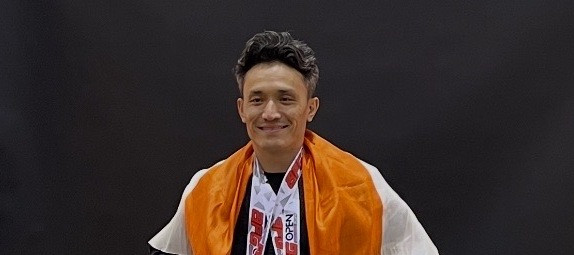
Q. Congratulations on winning the Asian Fight Gear Championship. On one hand you represented India and won gold, and on the other, Ladakhis were labeled “anti-India” after the September 24 violence. How do you feel about this contrast?
The “anti-national” label placed on Ladakh after the September 24 violence is deeply unfortunate. We lost four young men that day, and many others were injured. It is painful to see a community whose loyalty to the nation has always been steadfast suddenly being judged because of a single episode of violence.
For me, it became important to counter that narrative. Winning gold for India at the Asian Fight Gear International Championship in Thailand felt like a way to do that. I left for the event just days after the violence, carrying a lot of emotional weight. Competing on an international stage under that kind of stress was incredibly challenging, and it showed in my first bout, where my performance fell short because my mind was still clouded by everything happening back home.
But I kept reminding myself why I was there — that I needed to win.
In the final, I faced an athlete from Vietnam. I lost the first round, but I fought back and won in the second, ultimately securing the championship. That victory was not just personal; it was a message. I wanted the world to see that I am from Ladakh, representing India, and that Ladakhis are not “anti-national.” We are, and have always been, deeply patriotic citizens of this country.
Q. Please introduce Mixed Martial Arts (MMA). What potential and scope does it have in Ladakh?
Mixed Martial Arts is more than just a sport — it is a discipline that teaches respect, resilience, and mental strength. Globally, MMA is one of the fastest-growing combat sports, and India is quickly catching up.
MMA combines multiple fighting techniques. A bout often begins with close contact and takedowns, followed by ground fighting, which is based on Jiu-Jitsu. Once the fighters return to their feet, striking techniques such as kickboxing, boxing, and Muay Thai come into play. The integration of all these skills and styles is what makes MMA a complete and dynamic combat sport.
The sport has tremendous potential in India, and Ladakh, in particular, holds a unique advantage. Ladakhis grow up in high-altitude conditions, which naturally build endurance, stamina, and mental toughness. These qualities give fighters from the region a strong foundation for excelling in MMA. With the right training and opportunities, Ladakh can produce athletes who compete — and win — on international platforms.
Q. How did your interest in Mixed Martial Arts develop, and what inspired you to choose this field?
My journey into Mixed Martial Arts began about four years ago when a friend from Himachal Pradesh introduced me to Jiu-Jitsu, a Japanese martial art. He told me that even if you weren’t physically stronger than your opponent, you could still control and defeat them through technique. That idea stunned me — it felt almost like a superpower. That moment sparked my curiosity.
I tried Jiu-Jitsu for the first time in Delhi, and I was amazed to see how true it was. People smaller and less physically strong than me were able to defeat me with technique alone. That experience changed everything.
What began as curiosity quickly turned into commitment. I started training seriously under Coach Sadique Qaiyum at Crosstrain Fight Club in Delhi. The precision of the art fascinated me — how mind, body, and strategy come together, how technique can overpower force, and how the smallest fighter can outmaneuver the strongest.
As my passion grew, so did my desire to bring this discipline back home. That is how I started my journey and eventually opened Ladakh Combat Academy — not only to train myself but also to create opportunities for other young people in Ladakh to learn and grow through the sport.
Q. Tell us about the Ladakh Combat Academy.
Ladakh Combat Academy began in 2022. In the beginning, there were no students and no sparring partners — just me and a dream. Over time, local martial arts enthusiasts started showing interest. Fighters from disciplines like Karate and Taekwondo joined, and we began sharing skills. I taught Jiu-Jitsu and grappling, while they introduced me to boxing and other striking techniques. From these early exchanges, LCA slowly took shape — a grassroots movement redefining what martial arts could mean for Ladakh.
Today, Ladakh Combat Academy has grown into a vibrant community of young fighters. We now have around 12 to 15 regular trainees who train consistently, compete, and represent Ladakh on national MMA and Jiu-Jitsu platforms. Their progress is a testament to what belief, discipline, and consistency can build.
For me, this is only the beginning. My vision is to establish a full-fledged institute where children can start training as early as four or five years old. I also want to expand across Leh and Kargil, inspiring more young people to step onto the mat and channel their energy into something meaningful.
Through LCA, I hope to guide the next generation toward global exposure — helping them travel, compete, and connect with the wider martial arts community beyond Ladakh. My mission is simple yet powerful: to nurture a culture of discipline, resilience, and pride, while building a sense of belonging through combat sports.
Q. What challenges have you faced, and how can combat sports like MMA be promoted in Ladakh?
Mixed Martial Arts is a completely new sport in Ladakh, and it requires both awareness and proper promotion. Whenever we talk about MMA, people often associate it with Taekwondo or Karate. While elements of those disciplines are used in MMA, the sport itself is entirely different — it is a comprehensive combat system that combines striking, grappling, and ground fighting.
One of the biggest challenges is that we are building everything from scratch. To introduce the sport, we have conducted workshops in various schools to create awareness and help young people understand what MMA really is. I also have a team that trains consistently and participates in national and international championships.
Another major challenge is financial. Most of the expenses — training gear, travel, competition fees — are taken care of by me. Despite these hurdles, the spirit remains strong. I believe that when you begin with the right intention, things eventually fall into place. With more awareness, community support, and institutional backing, MMA can grow into a powerful and popular sport in Ladakh.
Q. What is your advice to the youth of Ladakh who aspire to choose MMA?
In today’s fast-evolving world, simply learning mainstream sports like football or cricket is no longer enough for many young people seeking something more challenging and dynamic. The time calls for new disciplines — ones that involve calculated risk, advanced technique, and broader opportunities. MMA fits perfectly with the spirit of today’s generation.
My advice to young aspirants is simple: understand the sport before committing to it. Come for a trial class, experience the discipline and intensity of combat training, and then decide whether this is the path you want to pursue. MMA demands hard work, consistency, and mental strength — but it is also deeply rewarding.
Message to the Readers
Explore new possibilities. Support emerging sports. And encourage young people to step outside their comfort zones — because growth begins where comfort ends.
-
 Reach Ladakh Skara Yokma, Airport Road, Near Councillor Quarter, India.


© 2018 Reachladakh. All rights reserved.
Web designs By : India Internet